Air Tools
Start with the job and the air you have to feed it. Air tools cover fast fastening with an air impact wrench or air ratchet, and cutting, dressing or freeing stuck parts with an air hammer, air chisel or air die grinder. The catch is supply - if the compressor cannot keep up, the tool will feel weak on the job.
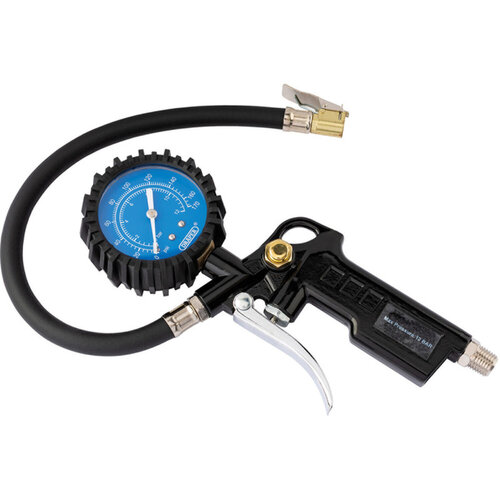
Draper Pistol Grip Air Tyre Inflator - 0-170 psi
Pistol grip air tyre inflator with 65mm analogue gauge and clip-on connector, ma…
For the Trade
You narrow air tools by the space you’ve got, the access you’re working in, and how long the tool will stay in your hand. A compact ratchet or drill suits tight bays and repeated fixings. A heavier impact or hammer makes more sense when you need more bite and can live with the extra weight. A die grinder is the one for dressing and cleanup, but it is not the answer if you are mainly after fast removal. Hose drag and trigger feel matter too. That is often what separates a tool you keep reaching for from one that stays in the box.
Air Tool Options Compared
If you’re choosing air tools, start with the drive you need and the space you’ve got to work in. An air impact wrench or air impact gun suits stubborn fasteners and repeated wheel work. An air ratchet is better for quicker jobs on smaller fixings, where you do not want to lean on it.
Pneumatic tools are worth a look when you want lighter handling and steady output. The trade-off is the compressor and hose setup behind them. If you’re building a kit from Mechanic's Tools, that usually settles the choice.
Choosing Materials and Size
The first question is what the tool has to do all day. That tells you whether you need speed, reach or outright bite. Lighter air tools suit repetitive work where control matters more than brute force. Heavier ones earn their place when fasteners are tight or the job is rougher.
Check the compressor side as well. If the tool wants more air than you can feed, it will feel weak whatever the badge says. Air Compressors often decides the spec as much as the tool itself.
If you are working panels or prep rather than general mechanical work, Bodywork Tools is usually where the money goes. The balance of control and finish is different.
Completing the Setup
Once you’ve picked the air tools, the next call is what needs to sit around them on the job. In a workshop or bodyshop, that usually means storage to keep the kit together, screens or panels where you need to split work areas, and the finishing items that stop the job looking half done.
A tidy setup matters because loose pneumatic tools get damaged, and the small parts go missing first. If the job is being handed over straight away, the surrounding finish often decides whether you need a quick fix or a more complete second visit.
Related searches
Local availability for Air Tools

