Staging Boards
Staging boards come down to load, span and how much room you’ve got to work with. If you need heavy duty staging boards for regular site use, check the board length and width first, then decide whether you want a plain board or a non-slip face for wetter jobs and busier access. Longer boards cut down the joints, but they are harder to move and handle when access is tight. Scaffold boards and construction boards are often used as shorthand, but the right pick is the one that matches the support setup and the job you are putting it on.
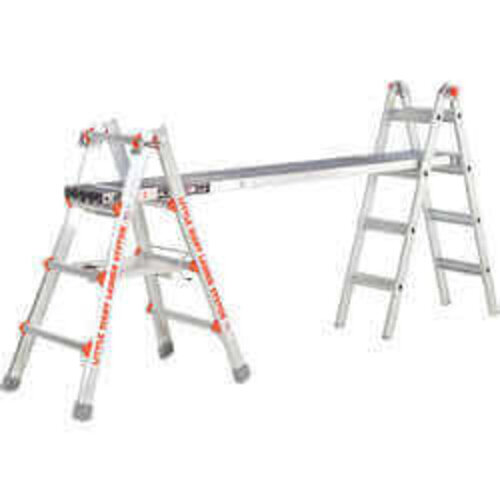
Little Giant Extending Work Plank
Extending aluminium work plank 1.8-2.7m, 113kg capacity, slip-resistant
For the Trade
Start with the space you’ve got and how the board’s going to be used. That usually settles the spec before finish or accessories do. On a tight setup, length and width matter more than anything else. If the board overreaches or crowds the working area, it creates problems fast. For regular trade use, heavy duty staging boards are the firmer call when you want less flex and fewer callbacks. Standard scaffold boards or construction boards can still suit lighter jobs. Once the span, access or load starts pushing it, choose the stiffer board rather than asking a lighter one to do the same work.
Popular Staging Board Formats
Heavy duty staging boards are the ones you reach for when the board is taking proper site punishment and you do not want flex becoming the issue.
Trade staging boards suit lighter, shorter runs where you want to keep weight and handling down. You give up some stiffness.
Staging board platforms make more sense when you need a more controlled working surface rather than a basic board span. They usually add cost and bulk.
The real decision still comes down to staging board lengths and widths. Get that wrong and you either overreach the gap or carry more board than the job needs.
If you are comparing the wider range, Ladders & Platforms is the parent hub.
Key Differences When Choosing
What usually decides it is how much punishment the board will take and how much handling you can live with. For regular trade use, heavy duty staging boards are the better call because they stand up to repeated loading. The trade-off is weight, and you feel that when you move them about.
Lighter trade staging boards suit shorter runs and quicker jobs where ease of handling matters more than brute strength. Check the lengths as well. A longer board cuts down the joints, but only if you can get it where it needs to go.
If the job is turning into a more controlled working setup, look at Access Towers. If you need clamps, hooks or other bits to finish the setup, Ladder Accessories is the next stop.
Next Decisions After Choosing
Once you’ve picked the board, the next call is what the rest of the setup needs around it. On a busy job, that usually means the supports, any edge protection, and the bits that keep the board steady while it’s in use all day.
Staging boards with a grippier surface make sense where boots are on and off the deck constantly. Plain boards are fine if the surface is already controlled and you do not need extra traction. If the run is being built out with other access kit, check the adjacent components early. The wrong support or a missing accessory is what causes most hold-ups, not the board itself.
Related searches
Local availability for Staging Boards

