Speakers
If you’re choosing speakers, start with how they’ll be driven and where they’re going. Active speakers suit a simpler setup because the amplification is built in. Passive speakers make more sense when you’re matching an amp or building out a fuller system. Bookshelf speakers usually suit tighter spaces and smaller rooms. Floor standing models give you more scale, but they need the room and the handling to go with them. Wireless and Bluetooth speakers are the quicker pick where cabling is the issue, though you give up some flexibility compared with a wired setup.

Av:link Stereo Plug to Stereo Plug Leads - 3.5mm
Standard 3.5mm stereo mini jack lead for audio devices
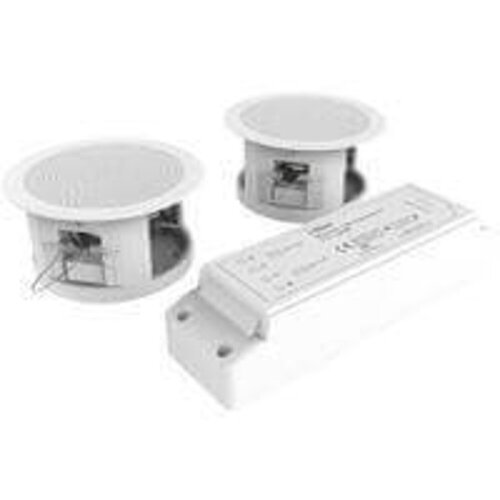
Philex Wireless Bluetooth Ceiling Speakers - 2 Pack
Bluetooth ceiling speaker kit with low-profile grilles, connects to lighting cir…
For the Trade
Start with the space you’ve got and how the job will be used. That usually narrows it down fast. Tight layouts tend to push you towards compact speakers or active speakers where you want less kit to hide. Passive speakers make more sense when the amp is already part of the spec. Bluetooth speakers and wireless speakers suit quick, low-fuss installs, but you give up some control over the wider system. If the brief is fixed and tidy, pick around access, mounting and cabling first. That’s what usually saves you from a return visit.
Speaker Types and Layouts
If you want the least kit on show, active speakers usually make sense because the amp sits in the cabinet. If you’re building around existing kit, passive speakers give you more control, but you add another box to the spec.
Wireless speakers and bluetooth speakers suit quick changeovers or rooms where you do not want to run signal cable. The trade-off is that you rely on the source and the connection quality.
Portable speakers work when the unit needs moving between areas. Outdoor speakers come into play where weather resistance matters more than finish.
Domestic Electricals is the parent range if you’re narrowing the job before you pick the layout.
What to Check Before You Buy
For most jobs, the first split is active speakers or passive speakers. That choice changes how much extra kit you carry and where control sits. Go active when you want a cleaner parts list and fewer variables. Go passive when the amplifier is already specified or the wider setup needs more flexibility.
After that, size and placement do the real work. Compact cabinets suit tighter runs. Larger formats usually give you more output, but they need the space to sit properly.
If the job is part of a wider fit-out, check Telephone Accessories or Alarms & Sensors at the same time. Those are the bits that often get missed until the last minute.
Useful Alongside Speakers
Once you’ve picked the speakers, the next question is what the job needs around them. If they’re going into a room build, the finish matters as much as the cabinet. A clean front edge and the right back box or panel help avoid rattles and poor alignment.
On a simple domestic fit, speakers often sit alongside doorbells or alarms and sensors, so check the control side early rather than leaving it to the last fix. If you need a cleaner parts list, passive speakers usually mean more kit to allow for. Active speakers keep it tighter.
Related searches
Local availability for Speakers


