Measuring Wheels
Measuring wheels come down to how far you’re covering and how rough the ground is. For short, tidy runs, a lighter wheel is easier to carry and turn. For longer site or boundary work, a larger, sturdier model usually tracks better and stays steadier on uneven ground. Digital measuring wheels suit jobs where you want a quicker read. Mechanical versions are simpler and less to go wrong. If access is tight or you’re moving between jobs, folding or compact measuring wheels are worth a look.
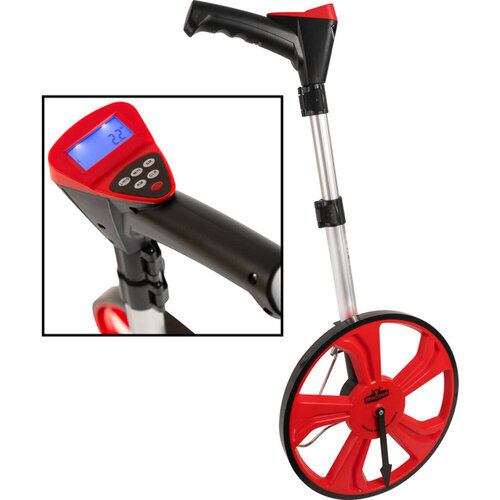
Minotaur Digital Measuring Wheel
Digital measuring wheel with illuminated display and 99999.9m range
For the Trade
Start with the ground you’re covering and how often the wheel comes out. That usually matters more than the spec sheet. If you’re working over kerbs, rough tracks or awkward runs, you want a wheel that stays steady and resets cleanly. On cleaner ground, a lighter unit is often enough. Digital measuring wheels give you a quick readout. Mechanical measuring wheels still suit simple, reliable use. Folding or compact frames matter when it’s going in the van every day. A bigger wheel can feel steadier over poor ground.
Popular Measuring Wheel Formats
Trade measuring wheels suit regular site use when you want a wheel that keeps its shape after repeated runs. Digital measuring wheels give you a faster read and cut the risk of miscounting, but they add another part to watch.
Mechanical measuring wheels stay the simple choice for plenty of jobs. There’s less to go wrong, and they’re easier to live with on site. Folding measuring wheels make sense when van space is tight, though the hinge and lock need to feel solid. If you’re buying for a crew, Measuring Tools is where you can compare the rest of the kit and see what sits alongside the wheel.
Key Differences When Choosing
Size is the first call with measuring wheels. Go for a large wheel when you need steadier tracking over longer runs or rougher ground. It rolls cleaner and keeps the count honest.
Compact measuring wheels suit jobs where you are carrying kit in and out of tight access, or the van is already full. You give up some stability and ease on broken surfaces. If you are also setting out angles or checking line, Angle Finders and Laser Levels usually come into the conversation before you spend on a more specialised wheel.
Next Decisions After Choosing
Once you’ve picked the wheel, the next call is what else has to travel with it. If the job needs readings logged and checked later, digital measuring wheels cut down the note-taking. If you want a simple run with fewer parts to fail, mechanical measuring wheels are still the cleaner buy.
On busy sites, measuring wheel accessories and measuring wheel replacement parts matter more than most people expect. A worn counter or loose handle slows you down before the wheel itself does. For long boundaries or rough ground, a heavy duty frame is usually worth it. A lighter wheel gets knocked about and starts giving poor readings.
Related searches
Local availability for Measuring Wheels

