Vernier Callipers
Vernier callipers come down to how much accuracy you need, how you read them, and what you’re measuring day to day. Digital vernier callipers are quicker to read when you’re checking parts all day. Analogue vernier callipers suit anyone who prefers a simple slide and no battery to think about. Stainless steel versions take more abuse on site, and 150mm sets cover most general work without carrying more tool than you need.
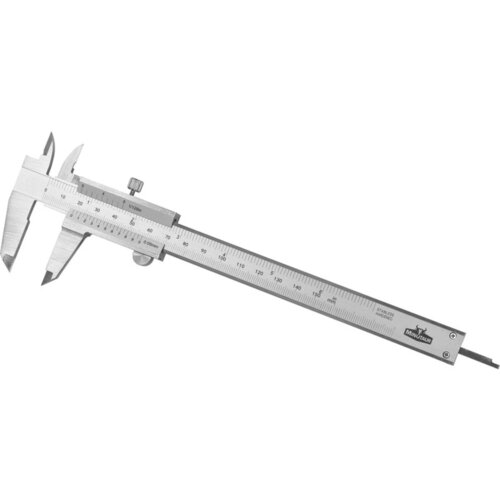
Minotaur Manual Vernier Caliper
150mm manual vernier caliper for internal, external, depth and pitch measurement
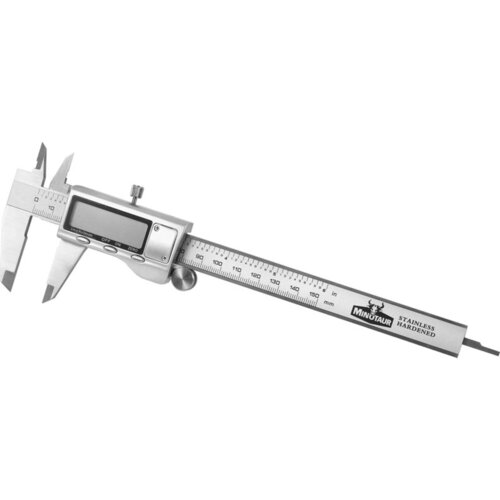
Minotaur Digital Vernier Caliper
150mm digital caliper with internal, external, depth and step measurement
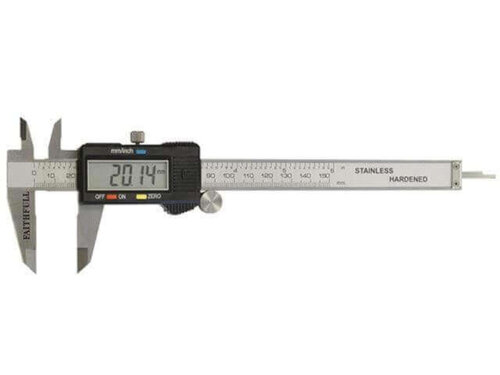
Faithfull Digital Caliper - 150mm
150 millimetres digital caliper with 4-way measurement and hardened stainless st…
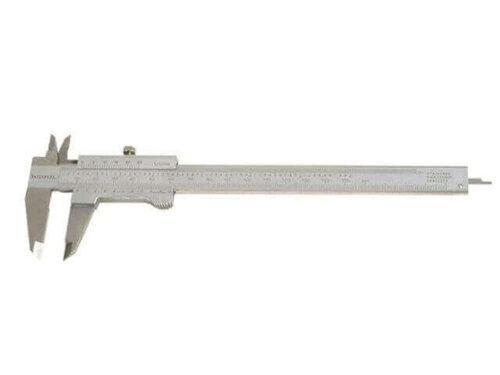
Faithfull Vernier Caliper - 150mm
150mm hardened stainless steel vernier caliper with dual Imperial/Metric reading
For the Trade
What matters first is how you’ll use vernier callipers on the job and how much room you’ve got to work in. If you’re checking parts all day, digital vernier callipers save faffing with the scale. If the tool lives in the box and comes out for the odd check, analogue vernier callipers are usually the simpler buy. Size matters as well. 150mm covers most day-to-day work, but once you’re into larger components or awkward access, you’ll want to step up rather than force a short tool to do a long job. Metric or imperial is worth sorting before you order, because mixed jobs are where mistakes get made.
Types of Vernier Callipers
Digital vernier callipers suit you when you want a quicker read and less chance of misreading the scale, especially if you’re checking a lot of parts through the day. Analogue vernier callipers still make sense when you want a simple slide with no battery to think about, but you give up that faster read.
Metric vernier callipers are the normal pick on most UK jobs. Imperial vernier callipers only really earn their place if you’re working to older drawings or mixed-spec kit. For general trade use, 150mm vernier callipers are the usual starting point. Go longer only when the parts are genuinely bigger.
If you’re comparing the wider range, keep it within Measuring Tools and pick the format that fits the job.
Selection Factors for Vernier Callipers
Material is where the choice usually tightens up. Stainless steel vernier callipers suit hard use because they give you a firmer face and stand up better to knocks. The trade-off is weight, and you notice that if you carry them all day.
Plastic vernier callipers are lighter and easier to handle on lighter-duty work. They suit jobs where you want less bulk in the hand. They are not the pick if the tool will live in a busy toolbox.
If you are also setting out angles or checking levels, Angle Finders and Laser Levels are the next calls.
Finish the Room
Once you’ve picked your vernier callipers, the next call is usually what else you need to measure against them on the job. If you’re checking finished sizes and tight tolerances, micrometers are the next step when callipers aren’t close enough.
For longer runs, tape measures, rulers and squares still do the heavier lifting. Angle finders and sliding bevels come in when the job turns to angles rather than straight dimensions.
A lot of call-backs start when the measuring kit doesn’t match the task, so buy for the job you’re pricing, not just the tool you reach for most.
Related searches
Local availability for Vernier Callipers


