Carpet Grippers
Carpet grippers come down to the carpet backing, the room, and how much fixing you want at the edge. Standard strips suit most straight runs because they are quick to set and give a clean hold. Go heavier-duty where the carpet takes more abuse, especially on stairs or busy entrances. If you are matching an existing job, check the pin layout and strip profile first - a poor match is what usually causes movement and call-backs.
For the Trade
Start with the space you’ve got and how the carpet will be used, because that usually decides the strip before anything else. Tight runs, awkward corners and stairs need a different approach to long straight lengths, and that is where the pin layout starts to matter. In practice, you are balancing grip against handling. More bite helps where the carpet gets worked, but it can be too much on lighter jobs and harder to keep tidy at the edge. Pick carpet grippers to hold the carpet properly, not to rely on the finish to do the job.
Carpet Gripper Options Compared
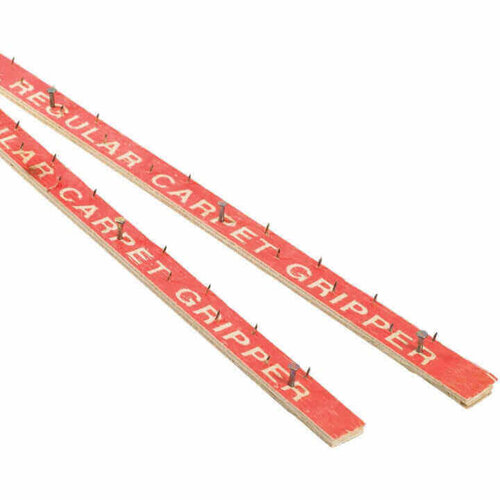
Carpet gripper strips are the usual pick for straight perimeter runs. They go down fast and keep the job moving.
Carpet gripper rods suit stairs and other spots where you want the carpet held more positively at the nose. They give you a firmer finish where the detail matters.
A carpet gripper strip is the simpler, cheaper option. Carpet gripper rods take more care to fit, but they suit the tighter turns and step work better.
Carpet gripper nails and carpet gripper tacks come in when you’re fixing through a different substrate or dealing with a tighter detail. If you’re matching the rest of the job, check the wider Flooring spec before you commit.
Choosing Materials and Size
For most jobs, you’re choosing between a standard carpet gripper strip and a heavier fixing where the carpet takes more pull, more traffic, or a tighter turn. The strip is the usual call on straight perimeter runs because it sets quickly and keeps the edge even. The trade-off is that it depends on the substrate and fixing pattern.
Where the job is tougher, carpet gripper rods and carpet gripper nails or carpet gripper tacks give you more bite. They are less forgiving if the line is out. If you are finishing into another surface, Door Strips usually come next. For modular jobs, Carpet Tiles may change the fixing approach altogether.
Completing the Setup
Once the carpet grippers are sorted, the next call is usually what finishes the edges and joins. If you’re running into another floor finish, door strips stop the edge getting battered and give you a cleaner break.
On stair work, carpet gripper rods are the follow-on buy. They hold the nosing properly, so you’re not trying to make a straight strip do a stair job. If the carpet is being cut around a perimeter or awkward return, carpet edging strips give you a cleaner finish than forcing the carpet to sit neat against the wall.
Related searches
Local availability for Carpet Grippers

