Push To Exit Buttons
Push to exit buttons come down to how the door releases and what the spec needs from the inside. A simple push button for exit is often the neatest option for a straightforward release, while wireless push to exit buttons avoid running a cable but need the right control setup. Surface mounted versions are quicker to fit on existing work. Flush units usually suit a back box already in place. The main issue is choosing the wrong format for the door furniture, then finding the wiring or fixing method does not suit the job.
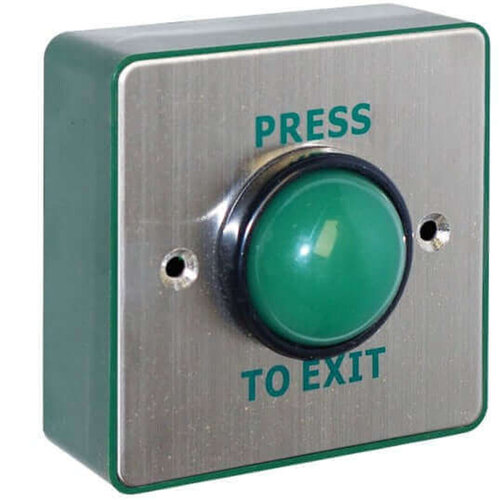
Securefast Dome Stainless Steel Plate PTE Surface - Green
Green dome push-to-exit plate, IP65, stainless steel, surface mount, laser print…
For the Trade
Start with the space you’ve got and how the door is being used, then the rest of the choice gets easier. On a tight frame or a busy escape route, you want a push button for exit that’s quick to find and hard to knock. If the job needs less cabling or the door position is awkward, wireless push to exit buttons can save time, but only if the control setup suits them. I’d look at the layout before the finish every time - the wrong format causes more call-backs than the wrong colour ever does.
Push To Exit Button Options Compared
The first split is usually between a plain push button exit switch and a push to exit switch that matches the access control kit you’re already using. Surface mounted push buttons are the quick fit when you want a visible, straightforward fix and don’t want to open up the door or frame any more than necessary.
Flush units look tidier, but they need the right back box and a bit more planning. Wireless push to exit buttons cut out cable runs across awkward openings, though they only make sense where the control setup supports them. If you’re matching the rest of the job, Door Furniture is the parent range to keep in view.
Choosing Materials and Size
You’re usually choosing push to exit buttons around the control gear you’re tying into and how much fixing room you’ve got. A wired push button for exit is still the normal call where the cabling is already there and you want a straightforward fit.
Wireless push to exit buttons make more sense where running a cable would add time or disruption, but only if the control gear will take them. Surface mounted push buttons suit quicker installs when you want the box on the face of the wall. Flush versions look tidier, but they need the right back box and wall build. If you’re also picking the surrounding ironmongery, Door Accessories and Front Door Furniture are the next checks.
Completing the Setup
Once the push to exit buttons are chosen, the next call is what sits around them and how the door is finished off. On a clean access control job, that means checking the surrounding panel or wall finish, then the door furniture and any closer or stop that affects how the door behaves after release.
If the opening sits within a fire or security spec, leave nothing to chance. The wrong trim or accessory can mean a return visit. Keep an eye on the front door furniture and the rest of the door accessories on the same order. Mismatched finishes and missing fixings are what slow handover down.
Related searches
Local availability for Push To Exit Buttons

