Flatbed Trolleys
Flatbed trolleys are the pick when the load is awkward, broad or needs a stable deck rather than a nose-heavy carry. Start with capacity and deck size. Then decide if you want a lighter frame for easier handling or a steel trolley for harder use and less flex. A platform truck suits regular site moves and heavier kit. A smaller flatbed trolley is enough where access is tight and you are not shifting bulky sheets all day.
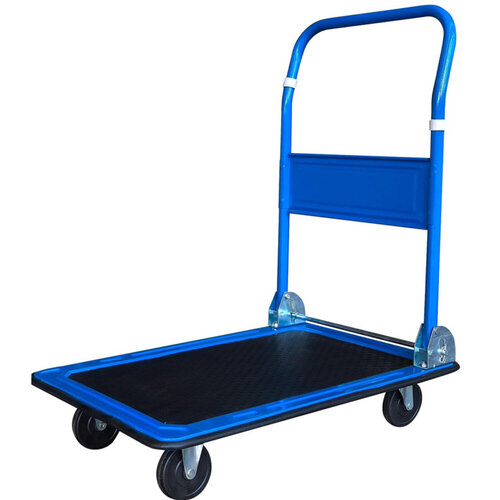
Folding Platform Truck - 150kgs
Blue folding platform truck with 150kg load capacity
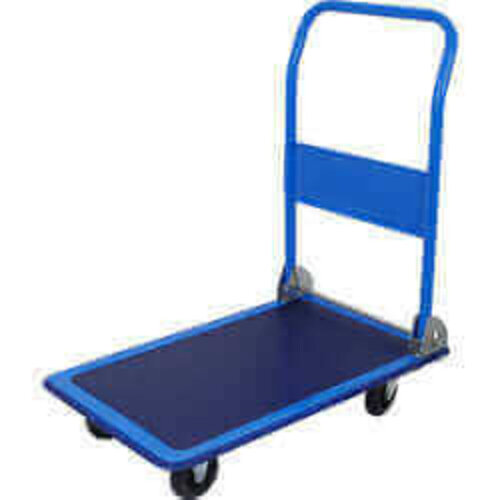
Platform Truck - 150kg
150kg steel platform truck with fold-down handle and non-slip deck
For the Trade
What usually decides it is the load, the route and how much room you’ve got to turn it. Flatbed trolleys with a bigger deck cut repeat trips, but they can catch you out in narrow aisles or crowded stores. A steel trolley is worth the extra weight when you want a firmer deck and less flex under heavier kit. A lighter frame is easier to move empty and up ramps. If the load is awkward or spread out, a flatbed trolley normally beats a sack truck because you’re not balancing it by hand.
Flatbed Trolley Options Compared
For Manual Handling, the first split is between an open deck and a more enclosed frame. A flatbed trolley with a plain platform suits mixed loads and quicker loading because you are not fighting sides or rails. The trade-off is less restraint if the kit wants to shift.
A platform truck with higher ends or a cage-style layout works better when the load is loose, stacked, or likely to move in transit. You give up a bit of easy access, but you gain more control over the load. Most call-backs come from choosing the trolley shape before the job shape.
Choosing Materials and Size
What usually decides it is the load and how hard the trolley gets used. If you’re moving heavier kit day in, day out, a steel trolley usually gives you a firmer enamelled face and takes knocks better. The trade-off is the extra weight when you’re turning it or loading it into a tight spot.
Lighter builds are easier to shift around site, but they’re not as forgiving when the job is rough. Size matters as well. Too small and you’re back to making extra trips. Too big and it becomes awkward before it’s even loaded.
If you’re also sorting loose kit, Storage Boxes usually make more sense alongside the trolley. Dollies & Trolleys suit jobs where the load needs a different carry style.
Completing the Setup
Once you’ve picked the flatbed trolleys, the next call is usually what sits around them. If the load is loose, boxed or likely to shift, sort the storage boxes and simple screens early. It keeps the trolley from turning into a catch-all.
Where kit moves between areas, a dolly or a sack truck may still suit the awkward item. The flatbed stays the main mover for mixed loads. Jobs go messy when the trolley is right but the surrounding storage is not.
Related searches
Local availability for Flatbed Trolleys

