Sack Trucks
Sack trucks come down to what you’re moving, how often, and where it has to go. A folding sack truck suits vans and mixed jobs where space matters, while a heavy duty sack truck is the one to pick when the load is regular and the frame takes more punishment. Aluminium keeps the weight down for lifting in and out, but steel usually feels more planted under a hard load. Wheel choice matters too - pneumatic tyres handle rough ground better, while solid wheels cut out puncture downtime.
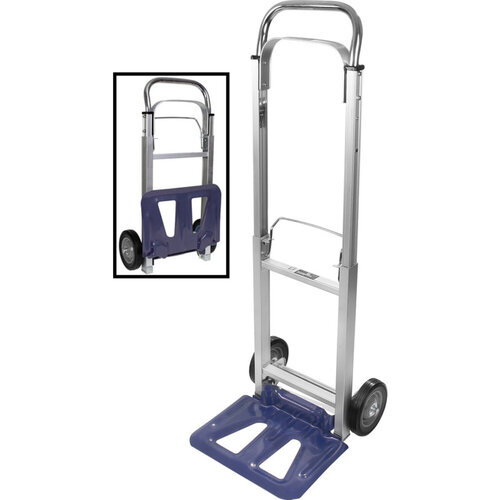
Einhell Folding Hand Truck - 90kg
Aluminium folding hand truck, 90kg capacity, 5kg weight, extends 107cm
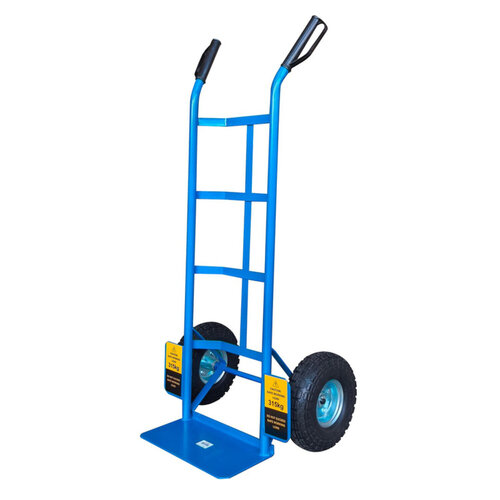
Sack Truck - 315kg
Heavy-duty sack truck with 315kg capacity and large wheels
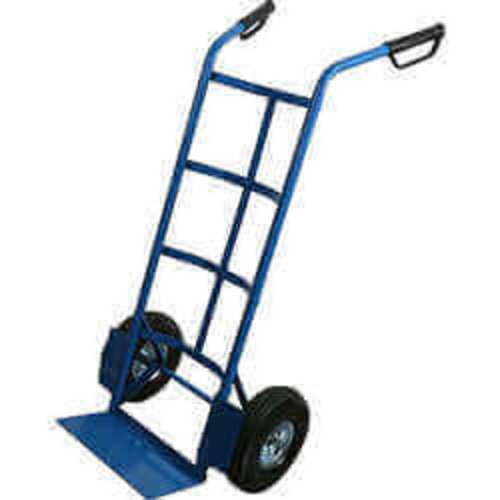
Heavy Duty Sack Truck - 315kg
Heavy-duty steel sack truck, 315kg load, pneumatic wheels
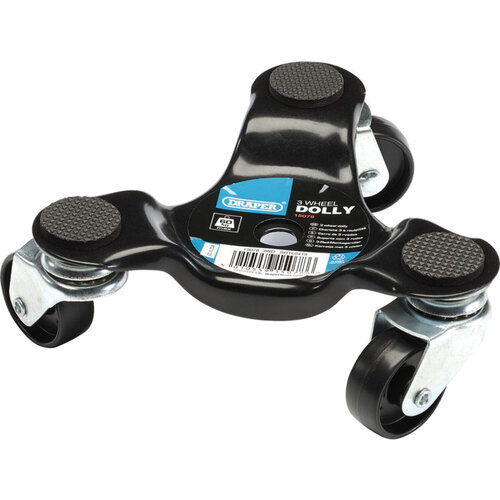
Draper Three Wheel Dolly - 60kg Capacity
Draper aluminium three-wheel dolly, 60kg capacity.
For the Trade
What usually decides it is the load, the route, and how often you’re shifting it. If you’re moving awkward kit through tight access or in and out of a van all day, a folding sack truck can save space when it’s stowed. For repeated heavy lifting, a heavy duty sack truck will stand up better to abuse, though it’s usually less handy when you’re short on room. A 3 wheel sack truck helps on stairs, but it’s not the first pick for every job. Wheel choice still matters where the ground is poor or punctures are a nuisance.
Popular Sack Truck Formats
A standard sack truck is the one you go for when you just need a simple load carrier and nothing specialised.
A folding sack truck makes more sense if it has to live in a van or be tucked away between jobs. You give up a bit of rigidity, so it is less suited to rougher handling.
A heavy duty sack truck suits regular site use and harder treatment, though it is usually bulkier to move. Three-wheel versions work better on stairs and awkward steps. A pneumatic tyre sack truck is kinder over rough ground. A solid wheel sack truck is the one to use where punctures are the problem.
If you’re comparing against other manual handling kit, start with Manual Handling and narrow it from there.
Key Differences When Choosing
Material is usually the first call.
An aluminium sack truck is lighter to lift in and out of the van. That helps when you’re moving the truck as often as the load.
A steel sack truck suits tougher daily site work. It gives you a firmer face and better abuse resistance. The trade-off is weight, so you feel it when you’re shifting it empty.
If the load is boxed or awkward, Storage Boxes can make it neater before it reaches the truck. Dollies & Trolleys are the better shout when you need a flatter carry and less tilt.
Next Decisions After Choosing
Once you’ve picked the sack trucks, the next call is what else is moving with them and how it’s being kept together. If the load is boxed or loose, storage boxes and packaging usually matter more than another truck spec, because a tidy load is less likely to shift on the toe plate or get damaged in the van.
Where you’re shifting mixed kit between jobs, dollies & trolleys can take the flatter, wider loads that a sack truck won’t hold as cleanly. That’s the bit that saves you from buying the wrong handling kit twice.
Related searches
Local availability for Sack Trucks


