Angle Grinders
Angle grinders usually come down to two things first: what you’re cutting or grinding, and how much room you’ve got to work in. A 115mm or 125mm angle grinder is the usual trade choice for general metalwork and site repairs. If access matters more than runtime, a cordless angle grinder makes sense. Stay on the lead and a corded angle grinder gives you steadier pull for longer runs. A compact grinder gets into tighter spots, but you give up some reach and disc size.
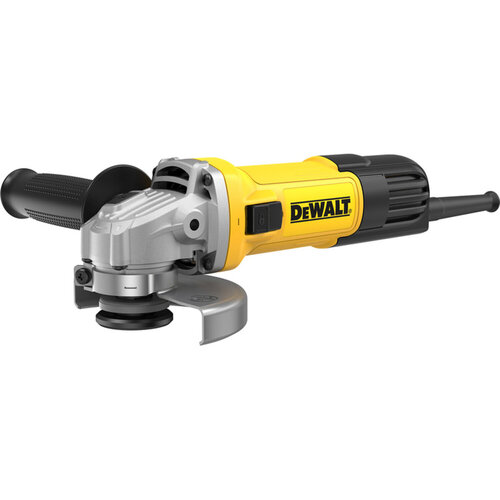
DeWalt DWE4036-GB 750W 115mm Angle Grinder - 240V
Dewalt DWE4036-GB 750W 115mm angle grinder with no-volt function
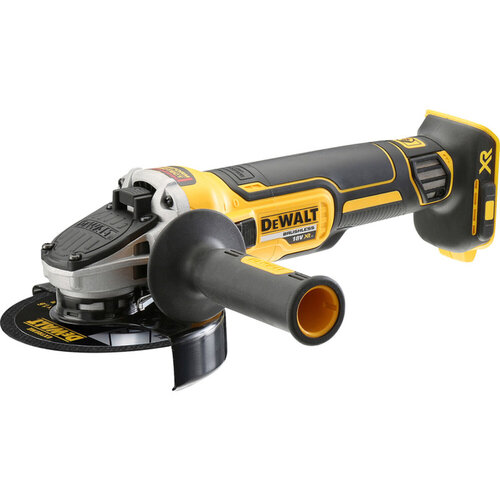
DeWalt DCG405N-XJ 18V XR Brushless 125mm Angle Grinder - Body Only
Body-only 18V brushless cordless angle grinder with electronic brake and dust pr…
Dewalt DCG412N-XJ 18V XR 125mm Cordless Angle Grinder - Body Only
DEWALT 18V XR cordless 125mm angle grinder, body only
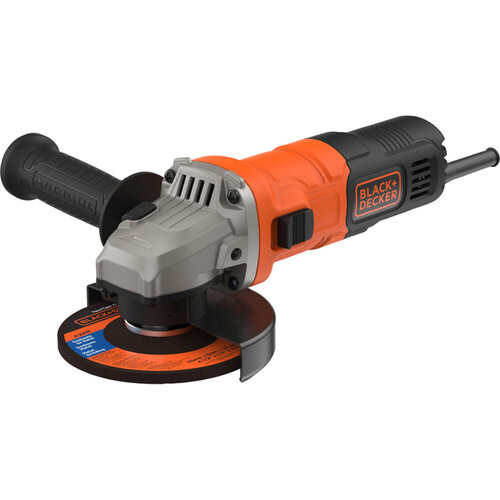
Black & Decker 710W 115mm Angle Grinder + 5 Discs - 230V
710W 115mm angle grinder with 5 discs, cutting and grinding guards
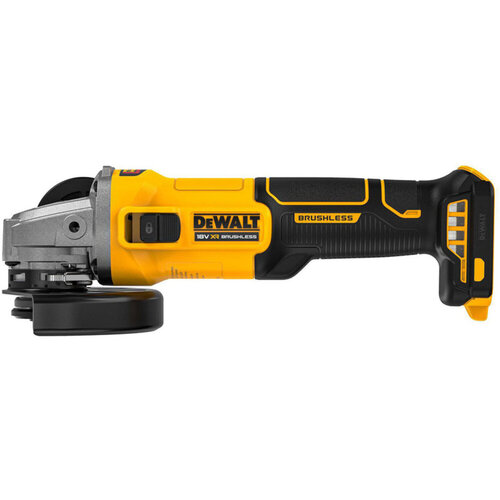
Dewalt DCG407N-XJ 18V XR Brushless 125mm Angle Grinder - Body Only
18V XR brushless 125mm angle grinder, body only, type B guard & clip-on
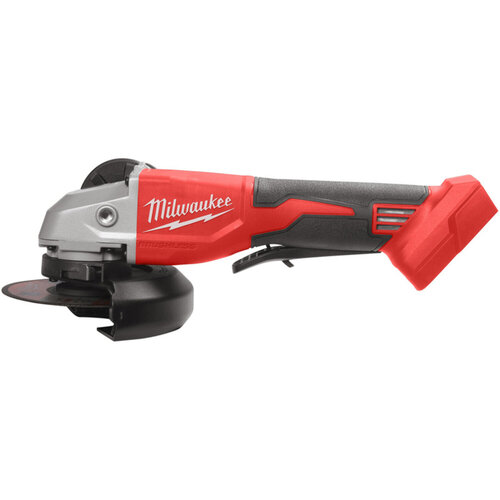
Milwaukee M18BLSAG115XPD-0 Brushed Angle Grinder - Body Only
Cordless 115mm angle grinder with brushless motor and 11,000 RPM
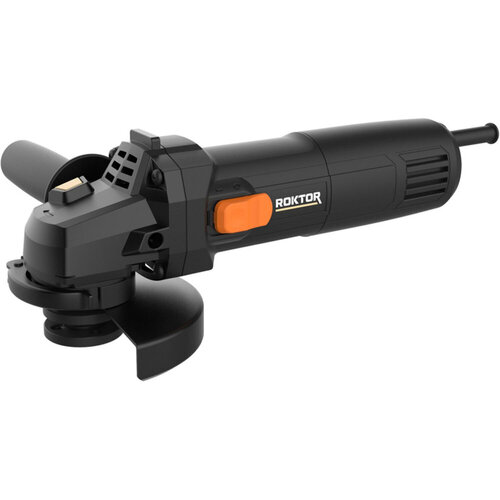
ROKTOR 750W 115mm Angle Grinder - 230V
750W corded angle grinder with 115mm disc, spindle lock and quick-change guard
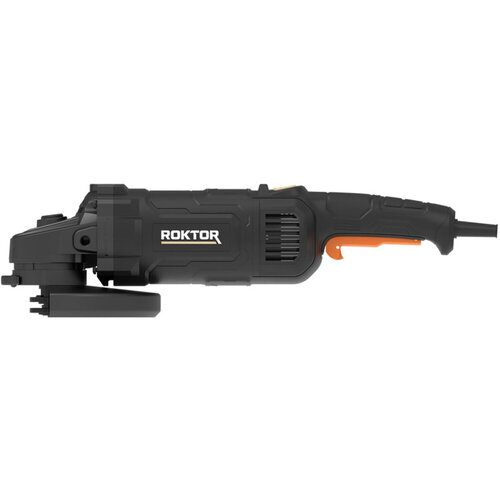
ROKTOR 2200W 230mm Angle Grinder - 230V
2200W 230mm angle grinder for heavy-duty tasks
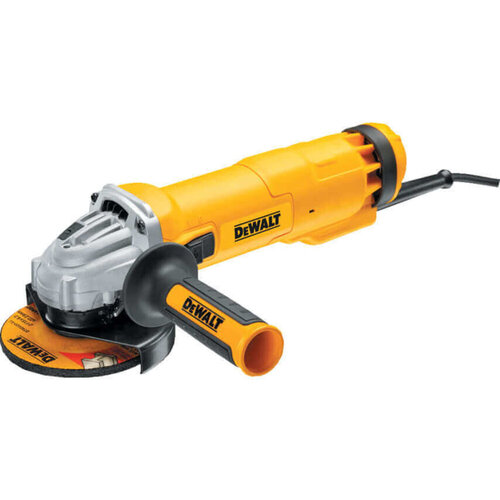
Dewalt Angle Grinder - 115mm 240V
115mm 240V corded angle grinder with 1010W motor and anti-vibration side handle
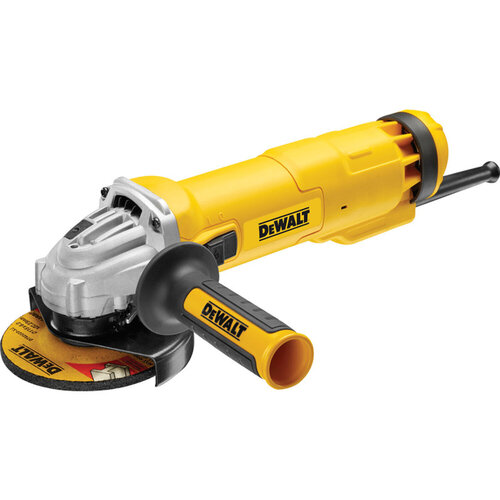
Dewalt DWE4206K 1010W 115mm Angle Grinder - 240V
1010W 115mm corded angle grinder with dust ejection and anti-vibration handle
For the Trade
Start with the job and the space you’ve actually got, then the rest falls into place. For tight access, a cordless angle grinder usually earns its keep because you’re not fighting the lead, but you do give up runtime and sometimes a bit of sustained grunt. A corded angle grinder makes more sense on longer runs or heavier work, where battery changes only slow you down. After that, size matters. A 125mm angle grinder gives you more reach, while a smaller unit is easier to handle where the work is cramped.
Popular Angle Grinder Formats
If you’re choosing angle grinders for the counter, the first split is usually between compact and full-size kit.
A smaller 115mm or 125mm angle grinder is the one you reach for when you want easier handling and less weight in the hand. It gets used most on general site work.
A larger model suits heavier grinding and longer runs, but you give up some control and it is more tiring overhead.
Cordless angle grinder options make sense where leads get in the way or access is awkward. A corded angle grinder still suits all-day use because you are not managing batteries.
Key Differences When Choosing
For angle grinders, size is usually the first call. A mini angle grinder or small angle grinder suits tight access, lighter work, or jobs where you want less weight in hand. A large angle grinder gives you more presence on heavier grinding, but the extra bulk shows up fast, especially overhead or in awkward corners.
In practice, the tool that feels fine at the counter can be the one that stays in the van once you’re on site. If the job is more about drilling out fixings or making holes than cutting or grinding, Drills are the better buy. Where dust matters more than the cut itself, Dust Extractors usually come into the decision as well.
Next Decisions After Choosing
Once you’ve picked the right angle grinders, the next call is what else the job needs around them. If you’re cutting or chasing in occupied areas, dust extractors are the bit that keeps the grit down, and they’re worth sorting before you start.
If the same area needs drilling as well, drills are the obvious follow-on. When the supply is patchy or the work is spread out, generators come into the conversation too. They do not change the grinder choice. They decide whether the rest of the kit keeps moving.
Related searches
Local availability for Angle Grinders








