Decking Paint & Stain
Decking paint and stain usually comes down to finish, drying time and how much the boards have moved. Paint gives fuller coverage and hides more. Stain keeps the grain visible and suits timber that is still sound. Quick-dry options help when the job needs to turn round fast, but they give you less time to work them in. If the decking is weathered or patchy, board condition matters more than the label on the tin.
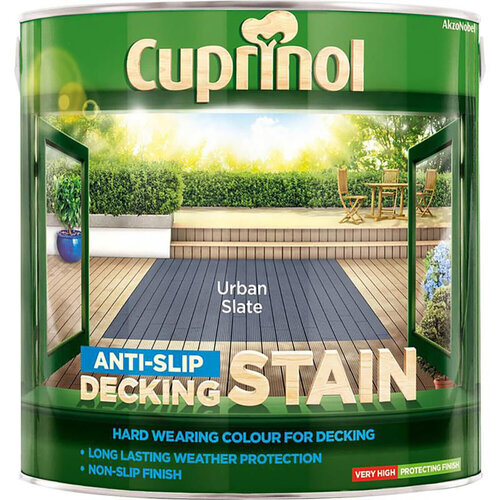
Cuprinol Anti-Slip Decking Stain 2.5L - Urban Slate
Exterior anti-slip decking stain, 2.5 litres, Urban Slate grey, water-based and …
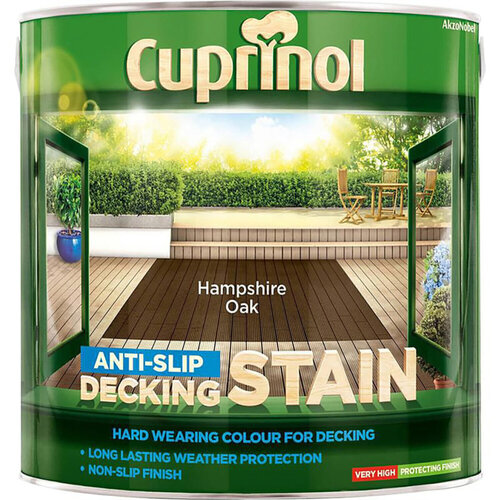
Cuprinol Anti-Slip Decking Stain 2.5L - Hampshire Oak
Exterior anti-slip decking stain, 2.5 litres, Hampshire Oak brown, water-based a…
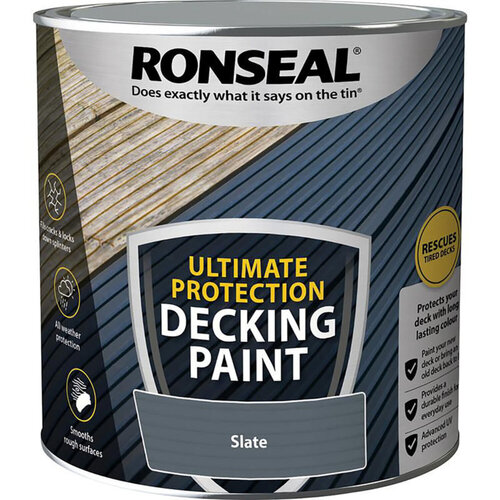
Ronseal Ultimate Protection Decking Paint 2.5L - Ronseal Ultimate Protection Dec…
Durable matt decking paint for exterior use, fills cracks and locks down splinte…
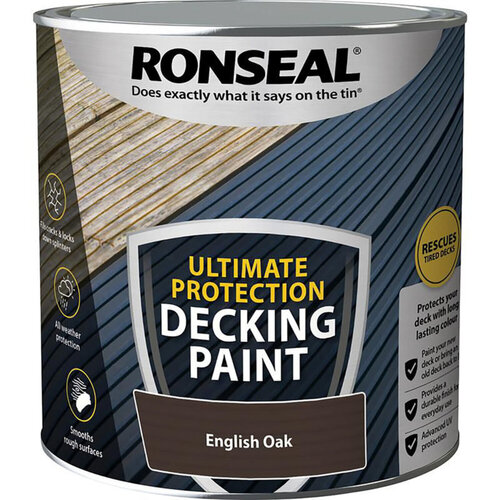
Ronseal Ultimate Protection Decking Paint 2.5L - Ronseal Ultimate Protection Dec…
Durable matt decking paint for exterior use, fills cracks and locks down splinte…
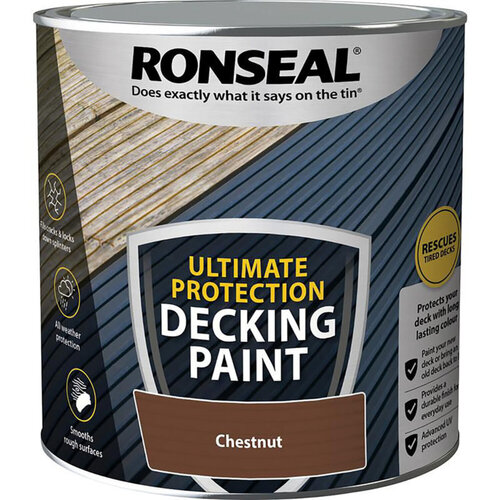
Ronseal Ultimate Protection Decking Paint 2.5L - Ronseal Ultimate Protection Dec…
Exterior decking paint in Chestnut, 2.5 litres, durable matt finish
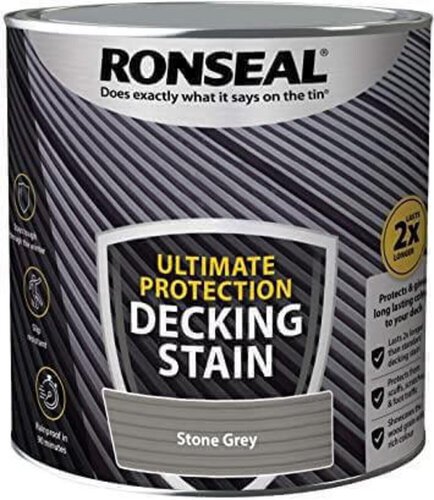
Ronseal Ultimate Protection Decking Stain - 2.5L Stone Grey
Slip-resistant decking stain rainproof in 90 minutes, Stone Grey
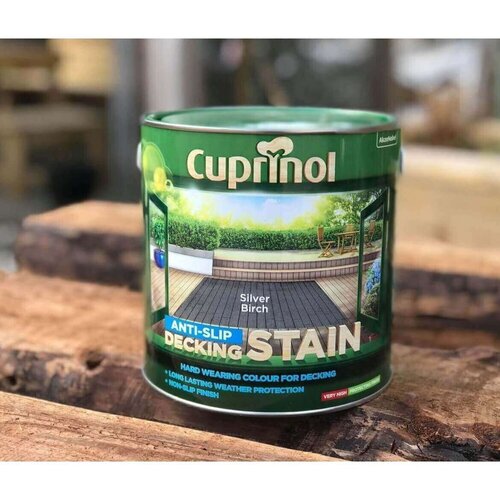
Cuprinol Anti-Slip Decking Stain 2.5L - Silver Birch
Exterior anti-slip decking stain, 2.5 litres, Silver Birch colour, water-based a…
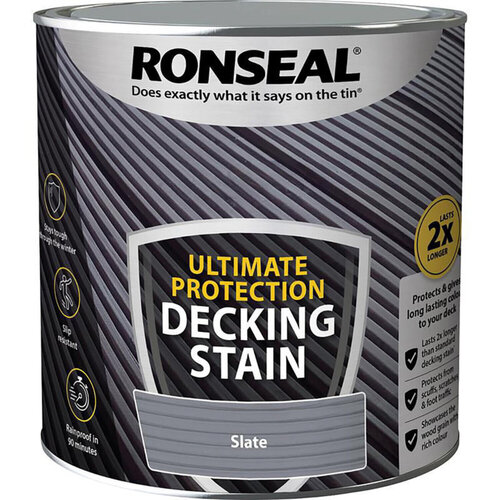
Ronseal Ultimate Protection Decking Stain 2.5L - Ronseal Ultimate Protection Dec…
Exterior decking stain in Slate, rainproof in 90 minutes
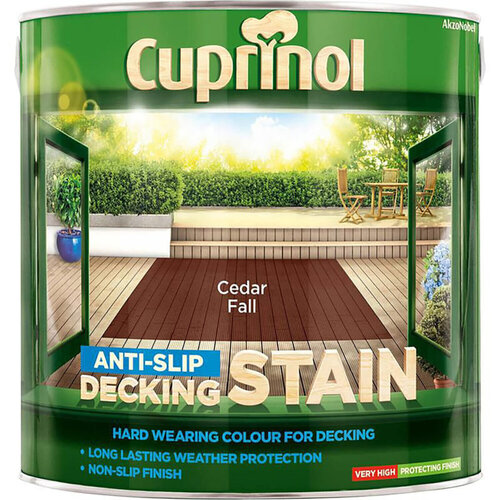
Cuprinol Anti-Slip Decking Stain 2.5L - Cedar Fall
Cedar-coloured exterior decking stain with anti-slip microbeads
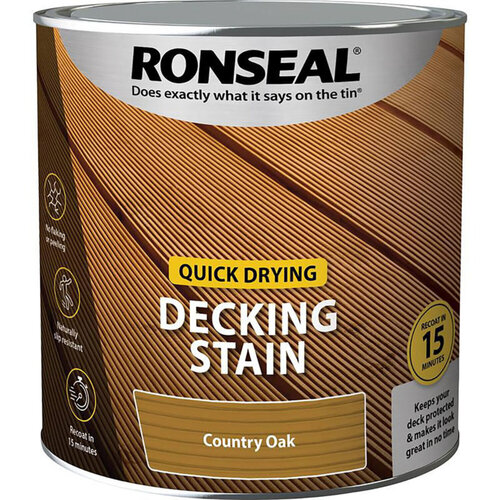
Ronseal Quick Drying Decking Stain 2.5L - Ronseal Quick Drying Decking Stain Cou…
Exterior decking stain in Country Oak, recoat in 15 minutes, 2.5 litres
For the Trade
Start with the job, not the label. On decking paint and stain, the first call is usually how much wear the surface has taken and how much downtime you’ve got. If the boards are sound but the finish is tired, you’re choosing between a more covering system and one that leaves more of the timber showing. That choice changes how forgiving the job is when the deck has old patching or mixed repairs. Recoat time matters as much as appearance on a busy site, because a slow system can hold the programme up. If the timber is already heavily built up, the wrong finish only adds another layer to fight later.
Decking Paint & Stain Types and Layouts
A decking coating suits you when you want fuller coverage and a more even finish across mixed timber. It hides more of the board, which helps when the surface looks uneven. The trade-off is less forgiveness on timber that’s already patchy or badly weathered.
Choose a stain when you want the grain to stay visible and the boards still have some life in them. It gives a lighter finish and keeps more of the timber character. Across the Exterior Paint & Woodcare range, that’s the same call you keep making. More coverage means less timber showing through. Quick-dry options suit jobs where programme matters more than open time.
What to Check Before You Buy
What usually decides decking paint and stain is the substrate, not the label. New or bare timber pulls product differently from boards that are already painted, patched, or weathered. Coverage and recoat time only mean much once you know what you’re going over.
If the deck is sound and you want a more opaque finish, decking paint and stain gives you that route. If the timber is already tired and you want to keep the system simple, Decking Treatment may be the better call.
For smaller timber jobs nearby, Garden Furniture Paint is the one to look at when the surface and wear pattern are different.
Useful Alongside Decking Paint & Stain
Once you’ve picked the decking paint and stain, the next call is what the timber needs before you open the tin. Fresh or patchy boards may need a primer or sealer first. Tired surfaces usually need a proper clean and key-up so the finish holds.
Quick-dry products help when the window is tight, but they leave less room to work back over missed spots. That’s where call-backs start. Keep the tools matched to the finish as well. The right roller or brush does more for a clean lay-off than forcing a heavier product.
Related searches
Local availability for Decking Paint & Stain








