Gear & Bearing Tools
Gear pullers come down to what you’re pulling, how much room you’ve got, and how much force the job needs. A 2 leg or 3 jaw gear puller suits straightforward external work where you want an even grip. A hydraulic gear puller is the one to reach for when the part is stubborn and you do not want to lean on the threads. Bearing pullers and internal bearing puller options make more sense when the contact point sits inside the housing. In practice, the wrong layout wastes time, not the lack of force.
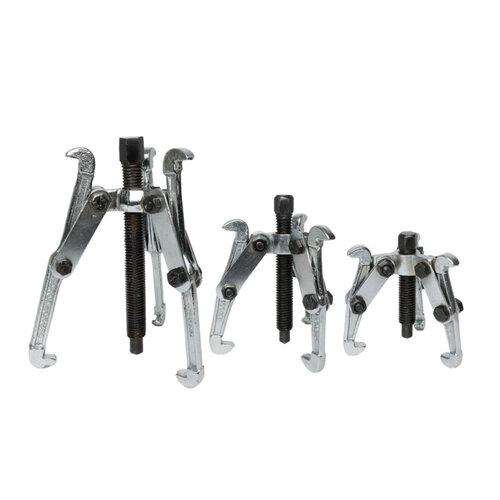
Gear Puller Set - 3 Jaw 3 Piece
3-piece gear puller set with 3", 4" and 6" jaws for secure component removal
For the Trade
Start with the space you’ve actually got round the job, then decide how the puller will be used before you look at extras. Tight access usually rules out bulkier gear pullers, and a job that needs steady, even force points you toward a hydraulic gear puller rather than a lighter mechanical option. If you’re working on bearing pullers, check whether you need internal or external contact first, because that changes the layout more than the finish does. A 3 jaw gear puller gives a more even grip, while simpler layouts can be handier where access is awkward.
Gear & Bearing Tool Options Compared
For most jobs, you’re choosing between a simple mechanical puller and a hydraulic gear puller. A 2 leg gear puller is the quicker pick for straightforward external work. It’s lighter to handle, but it won’t spread the load as evenly as a 3 jaw gear puller.
The 3 jaw pattern grips more evenly, so it suits jobs where you want the pull to stay central. The trade-off is bulk around the part. If the component is seized solid, hydraulic gear pullers give you controlled force and take the strain out of it. That’s why they often come into play in Mechanic's Tools when a mechanical puller starts to run out of pull.
Bearing pullers sit in a separate group. Use an internal bearing puller when the contact point is inside the race. Use an external bearing puller when you’re pulling from the outside.
Choosing Materials and Size
Start with the force the job is likely to need, then check how much room you have to work in. A mechanical gear puller suits regular strip-down work. A hydraulic gear puller makes more sense when the part is seized and you need controlled pressure instead of leaning on the bar.
A 3 jaw gear puller gives a more even grip on awkward faces. A 2 leg gear puller can be the neater choice where access is tight. If the job is more about bearings than gears, move to bearing pullers or an internal bearing puller. For powered removal, Air Compressors and Air Tools are the next call.
Completing the Setup
Once you’ve picked the right gear pullers, the next call is what else needs to be on hand while the job’s apart. If you’re stripping a unit on the bench, clean storage for the removed parts keeps things under control. A proper screen or panel helps when the work stays in the workshop area.
If the job sits in a larger service bay, the finish around the working space matters too. Loose or awkward items just get in the way when you’re handling a bearing puller or setting up a hydraulic gear puller. The difference is simple: the right tool does the job, but the space around it still needs to let you work.
Related searches
Local availability for Gear & Bearing Tools

