Decking Treatment
Decking treatment comes down to what the timber needs now - fresh protection, a colour change, or a quicker turnaround on site. If the deck is sound and you just need to keep water out and slow weathering, a clear or lightly tinted decking treatment usually makes more sense than a heavier coating. Tired or patchy boards need more coverage, but that usually means more prep and a less natural finish.
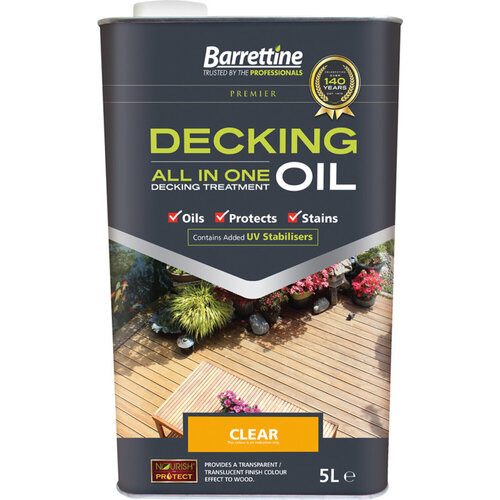
Barrettine All in One Decking Oil Treatment - Clear 5L
Clear all-in-one decking oil, 5L, for exterior timber protection and natural app…
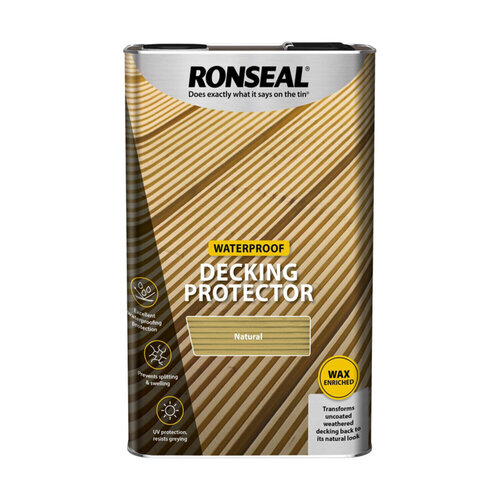
Ronseal Decking Protector - Natural 5L
Natural 5L exterior decking protector provides waterproofing and prevents sun da…
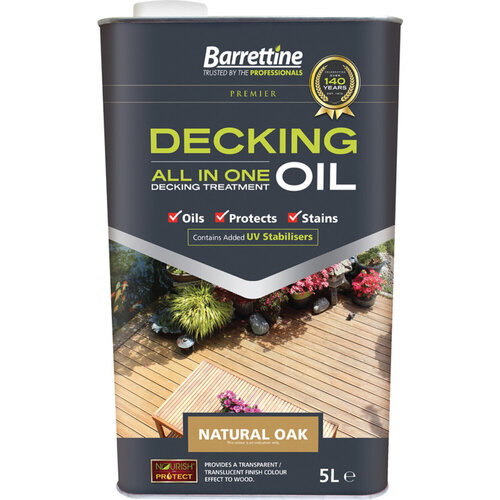
Barrettine All in One Decking Oil Treatment - Natural Oak 5L
All-in-one decking oil, Natural Oak 5L, for exterior timber protection and colou…
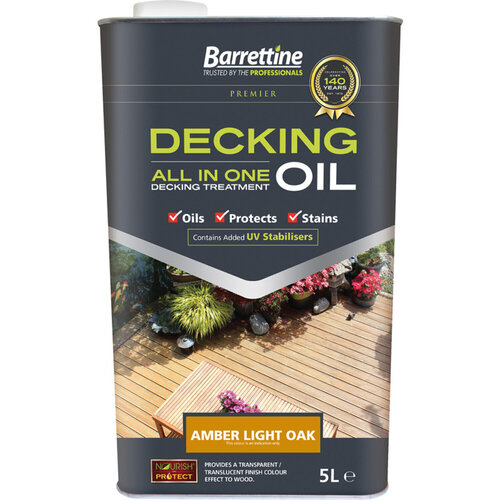
Barrettine All in One Decking Oil Treatment - Amber Light Oak 5L
Brown exterior decking oil treatment protecting against UV, mould and water, 5 l…
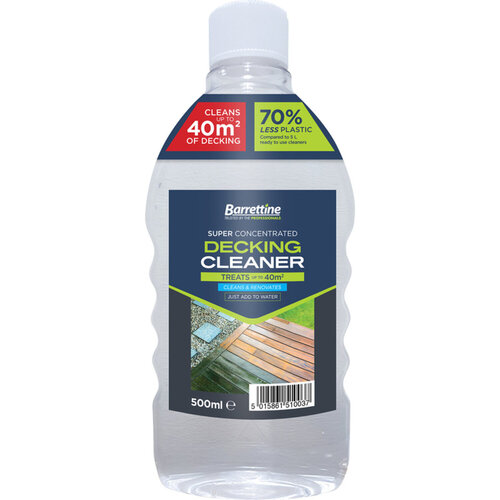
Barrettine Super Concentrated Decking Cleaner - 500ml
Super-concentrated decking cleaner for exterior use, 500ml treats up to 40m²
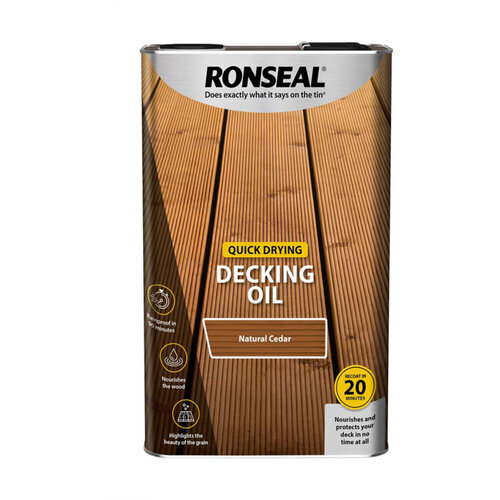
Ronseal Quick Drying Decking Oil 5L - Natural Cedar
5L quick-drying decking oil, natural cedar finish, rainproof in 90 minutes
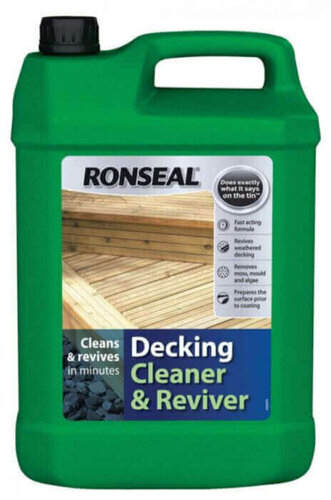
Ronseal Decking Cleaner and Reviver - 5L
Decking cleaner and reviver removes moss, mould and algae in a 5 litre container
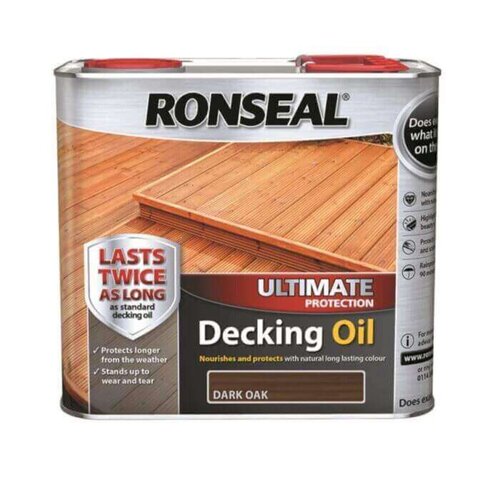
Ronseal Ultimate Protection Decking Oil - 2.5L Dark Oak
Dark Oak decking oil, rainproof in 90 minutes, prevents wood greying.
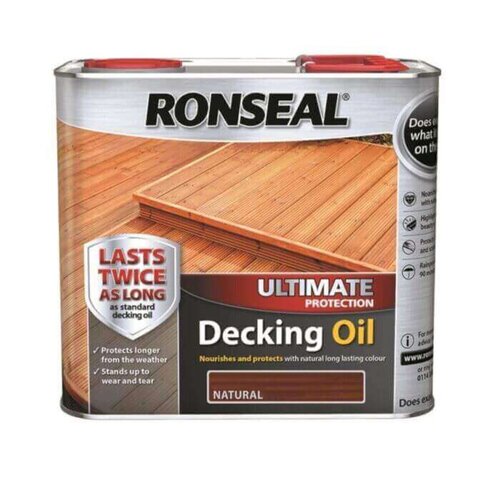
Ronseal Ultimate Protection Decking Oil - 5L Natural
Natural decking oil nourishes and protects, lasting twice as long as standard oi…
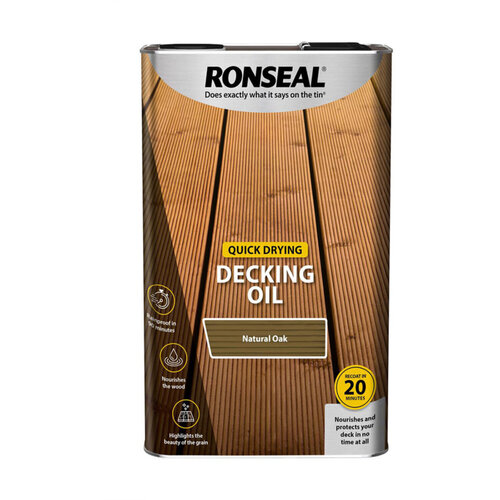
Ronseal Quick Drying Decking Oil 5L - Natural Oak
5L quick-drying decking oil, natural oak finish, rainproof in 90 minutes
For the Trade
Start with the space you’ve got and how the deck is being used, then narrow the decking treatment from there. Tight runs with awkward access usually call for something quicker to apply and less fussy to keep moving. Bigger open areas give you more room to choose on finish and durability. Where the timber takes hard wear or regular weather, weatherproof decking treatment is usually the one to reach for. If the programme is tight, quick dry decking treatment can save a return visit, but you give up some working time. That is what usually separates the right deck treatment from the rest.
Decking Treatment Types and Layouts
A quick-dry decking treatment suits jobs where the programme matters and you need the deck back in use sooner. The trade-off is less working time, so it gives you less room to work patchy timber.
Weatherproof decking treatment is the steadier pick when you want longer protection between visits. It may take longer to cure, but it holds up better once it’s on.
Standard deck treatment sits in the middle for general jobs. Trade decking treatment is the label you’ll often see when the spec is aimed at site use rather than a lighter domestic touch.
If you’re comparing the wider Exterior Paint & Woodcare range, this is where you decide what matters most - speed, durability, or ease of application.
What to Check Before You Buy
Start with how exposed the timber is and how much prep you’ve actually got. A decking treatment with stronger weather resistance suits boards that take full rain and sun, but you usually give up some speed and ease of recoat.
If the job needs a quicker turnaround, choose a quicker-drying deck treatment. Make sure the drying time fits the programme, not just the label.
For adjacent timber work, Garden Furniture Paint gives a harder decorative finish. Decking Paint & Stain suits jobs where you want more colour and coverage than open grain.
Useful Alongside Decking Treatment
Once you’ve picked the decking treatment, the next call is the timber around it. If the job runs into steps, screens or storage, keep the finish consistent so you’re not mixing products on the same run.
Where the deck meets other exterior timber, a separate deck treatment is usually the cleaner choice than forcing one product across everything. That’s where the sibling ranges come in - decking paint and stain for a more coated finish, or garden furniture paint where the timber needs a harder decorative face. Use the treatment on the deck boards, then move to the matching finish on the other timber so you don’t end up with patchy wear rates.
Related searches
Local availability for Decking Treatment