Tool Chests
Tool chests usually come down to how much kit you need to keep together, how often you move it, and whether you want drawers, a top box, or a deeper cabinet-style layout. Metal tool chests suit rougher site use and heavier loads. Plastic tool chests are worth a look when weight and handling matter more than a fully rigid build. Bigger chests cut down the number of separate boxes you’re carrying, but they only help if you’ve got the floor space and access for them.
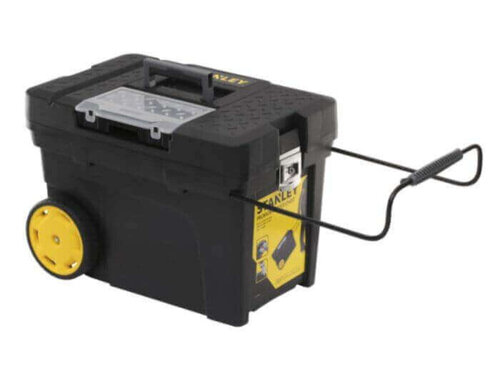
Stanley Pro Mobile Tool Chest - 375mm x 419mm x 613mm
53-litre mobile tool chest with telescopic handle, large wheels, and removable o…
For the Trade
Start with where it’s going and how often you’ll move it. If it stays in the van or workshop, heavier tool chests with a firmer top and better locking usually make more sense. If you’re shifting it about the job, weight and access matter more than sheer capacity. Smaller tool chests often get used properly instead of turning into dead space. The usual mistake is buying for the biggest loadout, then finding the lid won’t clear the van shelf or the chest is too awkward to drag out every day.
Tool Chest Options Compared
For most jobs, the first split is between a chest you leave put and one you need to move about. Heavy duty tool chests and metal tool chests suit a fixed bay or workshop corner because they take knocks and keep the kit together. The trade-off is weight and bulk.
Portable tool chests and tool chests with wheels make more sense when the loadout changes or you are moving between van, bench and site. You give up some capacity or rigidity, but you gain easier handling.
Lockable tool chests are the better call when the kit stays unattended. Trade tool chests and tool chests for tradesmen sit in the middle. They are practical without being overbuilt, and easier to justify than buying bigger than you need. Tool Storage
Choosing Materials and Size
Material is the first call. Metal tool chests usually suit rougher site use because they take knocks better. Plastic tool chests are easier to lift in and out of vans, and they’re less cold to handle in winter.
The trade-off is straightforward. Plastic is easier to move, but it won’t feel as rigid when loaded. Size matters just as much. Small tool chests keep the footprint down where space is tight. Large tool chests make sense when you need more kit together and can spare the room.
If security is part of the job, look at Vehicle & Site Safes. If you’re building out a fixed setup, Tool Storage Drawers usually come next.
Completing the Setup
Once you’ve picked the chest, the next call is what sits around it. On a van fit-out or workshop bay, tool chests with wheels work where you need to move kit without unloading it. A fixed run makes more sense if the chest stays put and you want a cleaner working line.
If you’re building the storage out, tool storage drawers are the usual next buy for smaller consumables and hand tools that disappear in a deep chest. For anything that needs to stay out of sight or under lock, vehicle & site safes avoid the awkward conversations later.
Related searches
Local availability for Tool Chests


