Organisers
Organisers come down to what you’re sorting and how often you need to get at it. For fixings and small parts, a compartment box with clear lids usually saves time because you can see what’s where. If the kit gets knocked about, a tougher plastic organiser with deeper dividers is less likely to spill. Drawer organisers suit van racking and bench storage where you want everything laid out flat. Smaller parts organiser boxes work better when you’re carrying mixed consumables to the job.
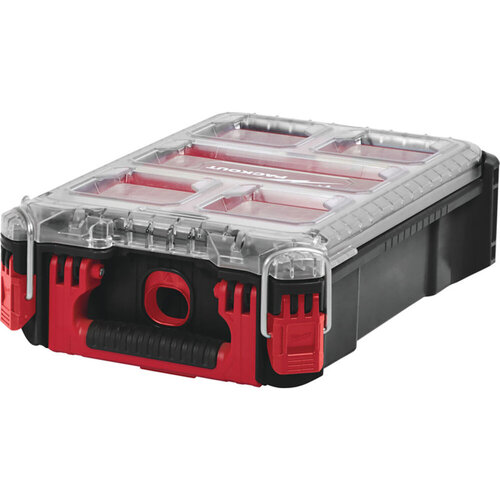
Milwaukee Packout Organiser Case - 99 x 203 x 305mm
IP65 seal organiser case, 99 x 203 x 305mm, with 10 bins, PACKOUT-compatible.
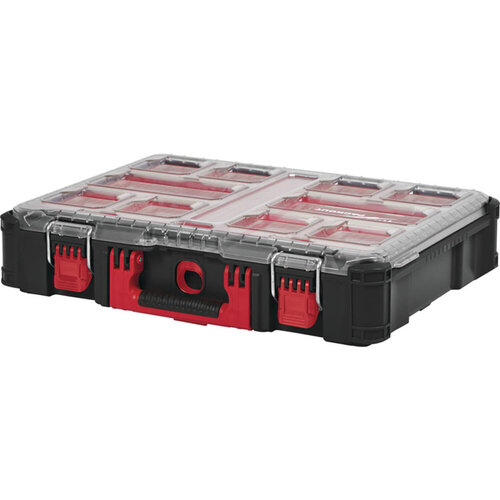
Milwaukee Packout Organiser Case - 99 x 457 x 305mm
IP65-rated organiser case, 99x457x305mm inner tray, with 10 bins, PACKOUT system…
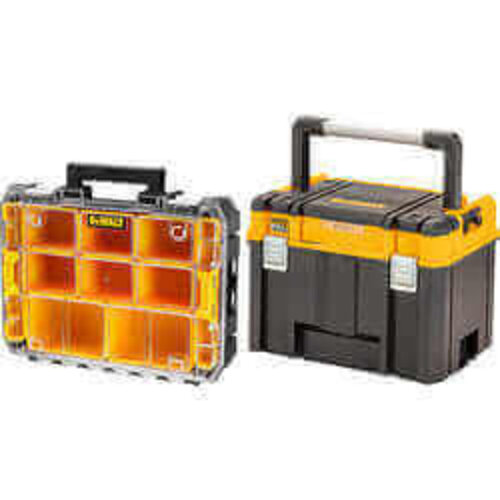
Dewalt TSTAK 2.0 Deep Organiser Top & High Capacity Organiser Combo
IP54-rated organiser combo with deep top, high capacity box, and removable cups
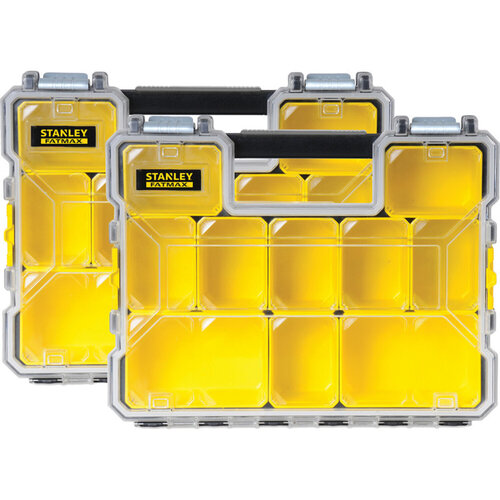
Stanley Fatmax Waterproof Deep Pro Organiser - 446 x 356 x 116mm 2 Pack
2-pack yellow waterproof deep organiser, 446 x 356 x 116mm
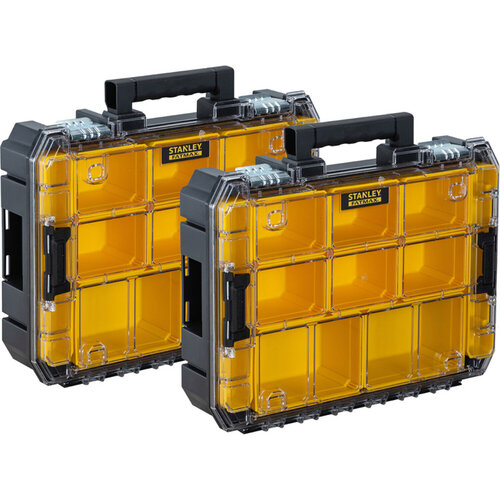
Stanley Fatmax Pro-Stack Organiser - Twin Pack 440 x 119 x 332mm
Twin pack of 6.3L stackable organisers with clear lids and 10 totes
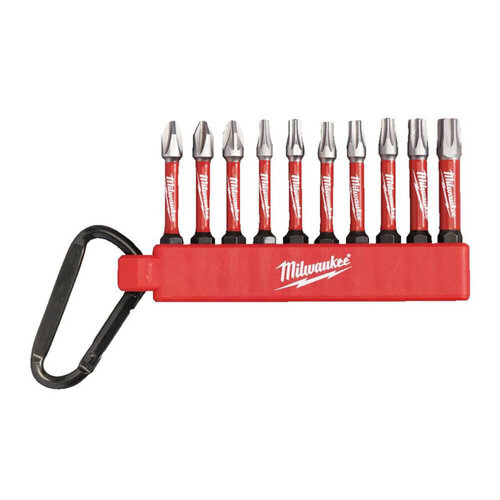
Milwaukee Shockwave‚Ñ¢ Carabiner - 10 Piece
10-piece impact-rated screwdriver bit set with carabiner for tool belts.
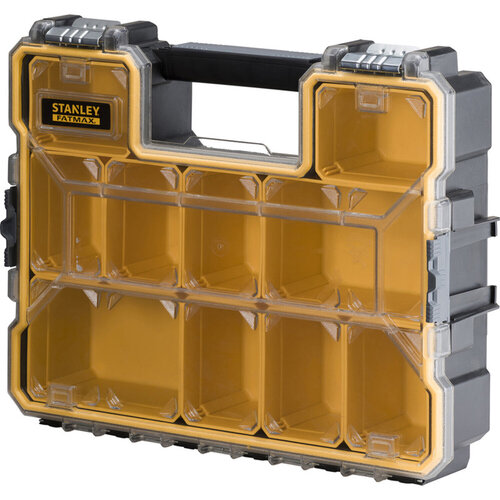
Stanley Fatmax Waterproof Deep Pro Organiser - 446 x 356 x 116mm
3-pack metal waterproof organiser, 446 x 356 x 116mm
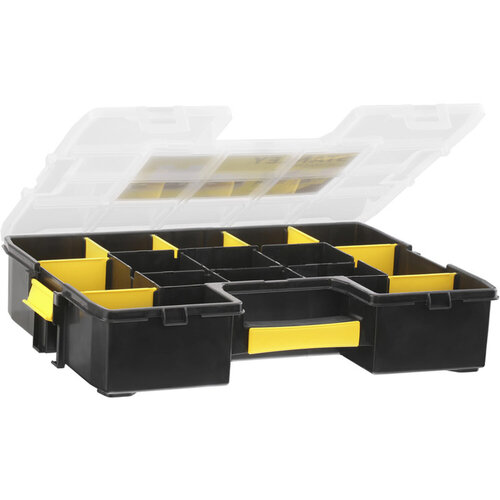
Stanley Sortmaster Organiser - 420 x 325 x 90mm
Stackable organiser with removable dividers and clear lid, 420x325x90mm
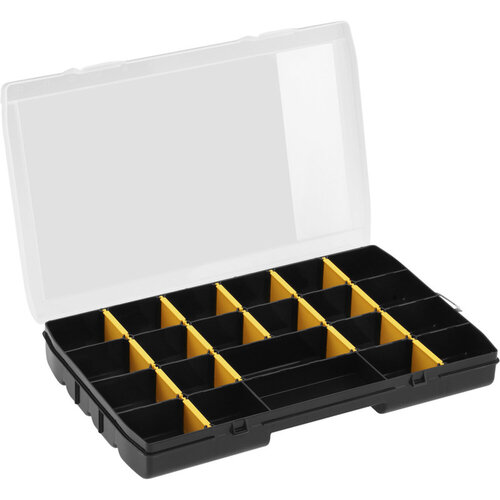
Stanley Essentials Organiser - 14" (357mm)
357mm organiser with removable dividers for small fixings
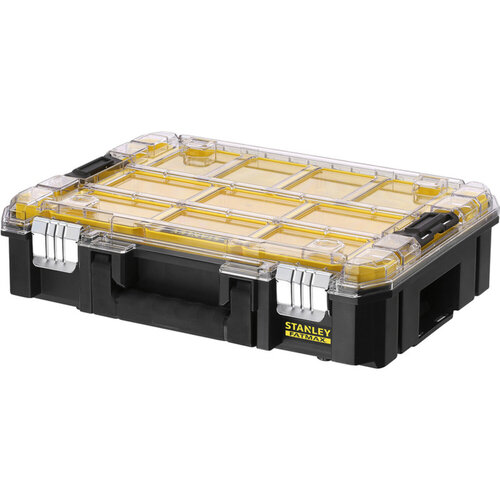
Stanley Fatmax Pro-Stack Organiser - Single Pack
Stackable organiser with 6.3L capacity and 10 removable compartments
For the Trade
What matters first is how much sorting you need and how often you’re back in the box. A parts organiser with fixed compartments is fine when the contents stay fairly consistent. A plastic organiser with removable trays or dividers gives you more control when the job changes week to week. Bigger compartments save time on bulk fixings. Smaller cells stop mixed fasteners wandering about. The usual mistake is buying for capacity and then finding the lid won’t shut once the awkward bits go in. If it’s going in a van or being carried between jobs, weight and latch quality matter as much as the layout.
Popular Organiser Formats
Start with how often you need to get at the fixings. Drawer organisers suit bench or van storage when you want each size kept separate and easy to grab.
Stackable organisers make more sense when you’re carrying several kits and need them to lock together without taking over the shelf. The trade-off is access. You gain neat transport and lose a bit of speed if you’re opening them all day.
Compartment organisers sit in the middle for mixed fixings and small components. They keep parts visible and sorted, but you still have to sort through the layout as you work. If you’re building out a wider Tool Storage setup, that usually decides whether you want one tidy unit or a few smaller organisers split between jobs.
Key Differences When Choosing
Material is where most of the choice sits. Plastic organisers are usually the lighter option, so they’re easier to move between van, bench and job. They’ll also take a bit of rough handling.
The trade-off is they can feel less solid than heavier cases, especially when you’re loading them with fixings all day. For small parts in a drawer or on a shelf, a plastic organiser is often the sensible pick.
If you’re tying it into Tool Storage Drawers or a bigger Tool Storage Systems setup, check the size and footprint first. A parts organiser that’s too bulky is the one that gets left behind.
Next Decisions After Choosing
Once you’ve picked the organiser, the next call is where it lives and how you’ll use it. Bench and van setups usually point you towards drawer organisers or a storage organiser that stays put. If the kit changes from job to job, you’ll want something you can lift out and rework quickly.
A parts organiser box works when you’re splitting fixings by size and need to see them at a glance. Go deeper if you’re carrying mixed hardware that would spill out of shallow trays. The usual mistake is buying for the biggest load, then finding the compartments are too coarse for the small stuff that actually goes missing.
Related searches
Local availability for Organisers





