Pressure Washers
Pressure washers usually come down to what you’re cleaning, how often, and how much hose and cable faff you can live with. An electric model suits lighter, regular work and is easier to handle. A petrol pressure washer makes more sense when you need freedom from a socket and more grunt. If storage is tight, or you’re moving between jobs, a compact or portable pressure washer is easier to shift. You do give up some output and run time. For heavier commercial use, look at the bigger units. An under-specced machine is the one that gets called back.
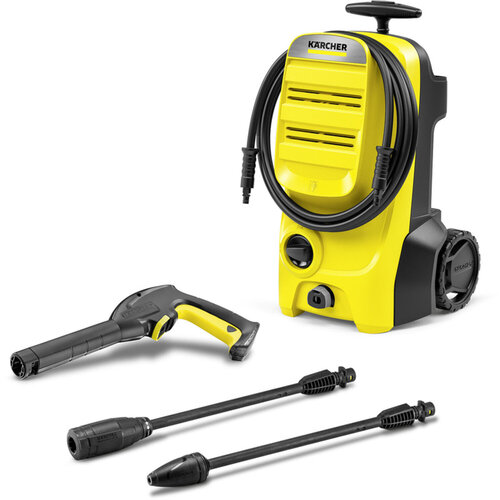
Kärcher K4 Classic Pressure Washer - 130 bar
130 bar medium-duty pressure washer with 6 m hose and detergent tank
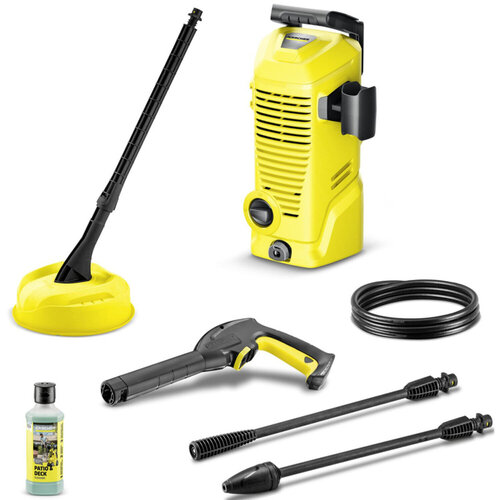
Kärcher K2 Home Pressure Washer - 110 Bar
1400W pressure washer, 110 bar, includes patio cleaner and detergent
For the Trade
Start with the space you’ve got and how you’ll use the machine, then the rest is easier to narrow down. If it’s awkward to store or a pain to move between jobs, it soon stays in the van. If it’s too small for the work, it just slows the job down. For regular yard and vehicle work, an electric pressure washer is usually the tidy option. If you need more freedom from sockets and longer run time, a petrol pressure washer makes more sense. Step up to a heavy duty or hot water machine only when the job calls for it. Otherwise, you’re paying for output you may not use every day.
Pressure Washer Types and Layouts
Most pressure washers come down to three things: how hard the dirt is, how long you’ll be on it, and how often you need to move the machine.
An electric pressure washer usually suits lighter, repeat work. Setup is simpler, and you avoid fuel handling.
A petrol pressure washer is the better call when you need freedom from sockets and more grunt. The trade-off is convenience, so it’s less handy for quick in-and-out jobs.
A portable pressure washer makes more sense when access and storage matter more than outright output. If you’re comparing the wider Power Cleaning range, the job usually decides the layout first.
What to Check Before You Buy
Start with where the machine will live and how often you’ll move it. A compact pressure washer suits tight storage or jobs where you’re loading in and out all day. The trade-off is less stability and usually a bit less comfort in use.
If it stays on the van or in one yard, a larger frame is easier to handle and tends to sit better when the hose pulls. Over longer shifts, that extra footprint is often worth it.
If the job is more about finishing than bulk dirt, you may also be looking at Window Vacuums. For wet pickup and debris after washing, Vacuum Cleaners are the next call.
Useful Alongside Pressure Washers
Once you’ve picked the pressure washer, the next call is what sits around the job. On a vehicle wash or yard clean, that can mean storage for hoses and lances. If there’s a lot of rinse-off work, you may also need better waste control and a finish that won’t mark up straight away.
If you’re cleaning alongside other kit, look at the neighbouring power cleaning ranges too. Vacuum cleaners and window vacuums often come into the same order when the job runs from wet wash-down into final clean-up.
Local availability for Pressure Washers

