Electric Showers
Electric showers usually come down to supply, output and whether you’re replacing like for like. Lower-kW units are often the easier fit where demand is modest. Higher-output models suit busier bathrooms if the electrics and water supply are already there. A thermostatic electric shower is worth the extra spend when temperature stability matters. For ordinary replacement work, a basic electric shower is still the economical call.
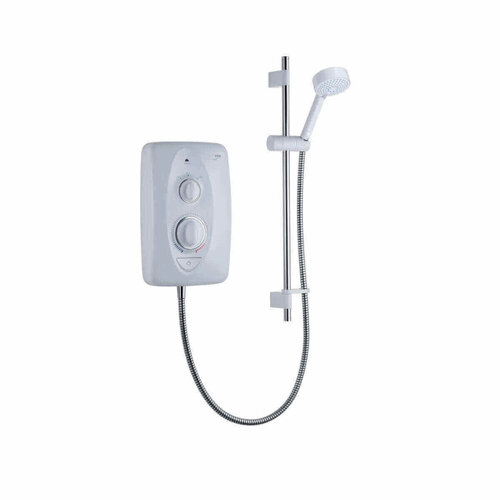
Mira Jump Multi-Fit Electric Shower - 9.5 kW
9.5 kW electric shower with 5-spray head and Clearscale anti-limescale
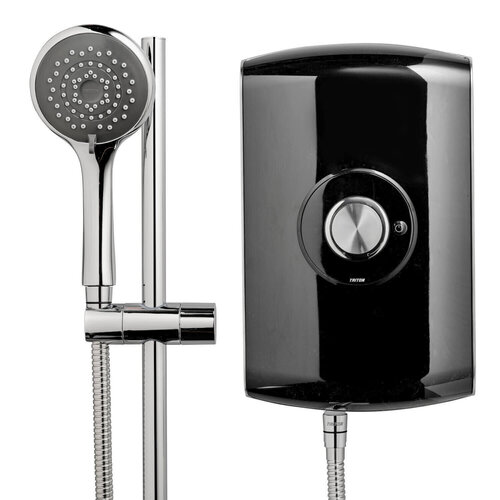
Triton Amore Electric Shower - 8.5kW Gloss Black
8.5kW electric shower with touch controls and rub-clean 5-spray head
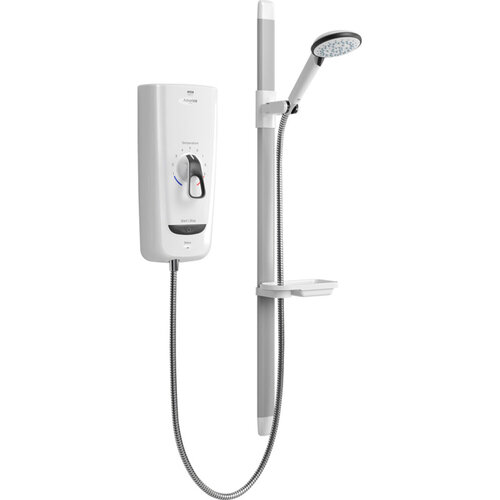
Mira Advance Thermostatic Flex - 8.7kW
8.7kW electric shower with thermostatic control and anti-limescale technology
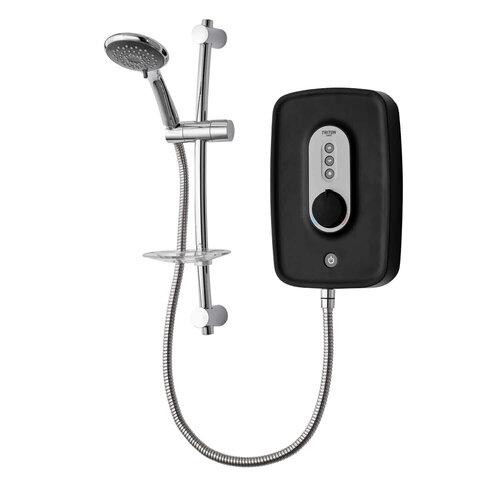
Triton Danzi Electric Shower - 8.5kW Black
8.5kW black electric shower with temperature dial and 5 spray patterns
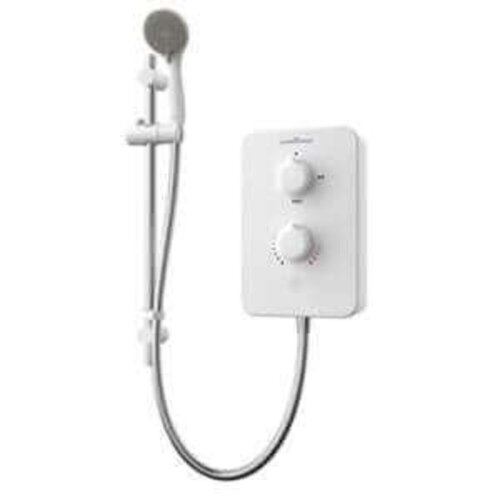
Gainsborough Slim Duo Electric Shower - 8.5kW White
8.5kW electric shower with instant hot water, white, multiple install options
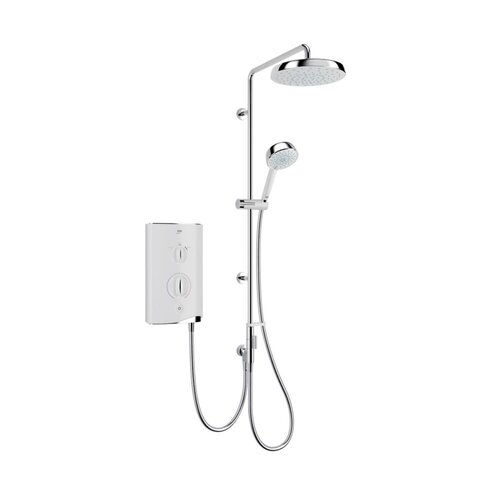
Mira Sport Dual 9Kw - White/Chrome
Mira Sport Dual 9kW electric shower, dual showerheads, white/chrome
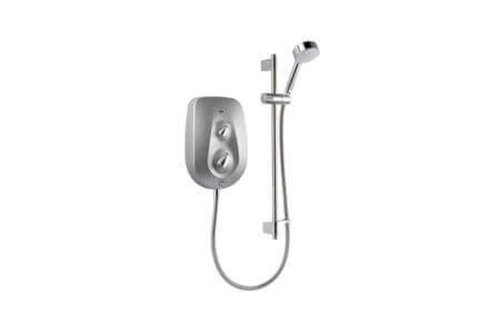
Mira Vie Electric Shower - 8.5kW Chrome
8.5kW chrome electric shower with Clearscale limescale reduction
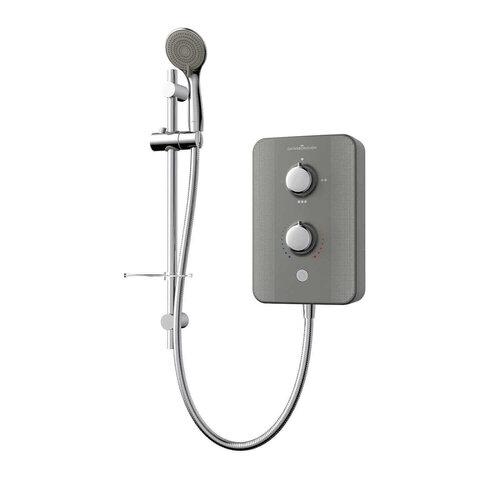
Gainsborough Slim Duo Electric Shower - 9.5kW Titanium Grey
Gainsborough Slim Duo 9.5kW titanium grey electric shower
AKW iTherm 8.5kW Thermostatic Electric Shower - White Standard Kit
8.5kW thermostatic electric shower with LED display and phased shutdown
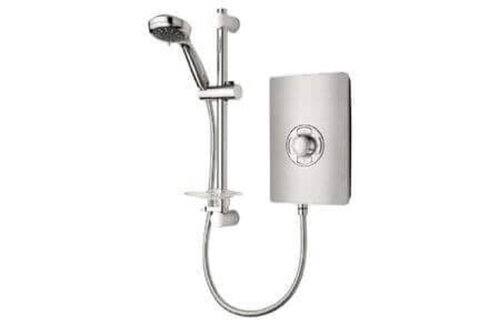
Triton Aspirante Electric Shower - 9.5kW Brushed Steel
9.5kW electric shower with brushed steel finish and five spray patterns.
For the Trade
What matters first is the supply you’ve got and whether you’re replacing like for like. If the incoming feed and cable capacity are tight, an 8.5kw electric shower is usually the safer shout. If the job can take more output, 9.5kw or 10.5kw gives you a stronger shower without changing the basic approach. A thermostatic electric shower is worth the extra spend where temperature stability matters. A standard electric shower still makes sense when the brief is simple and the budget’s tight. Space and layout can also decide it: a compact unit suits a straight swap, while a bigger enclosure or awkward pipe run may push you towards the model that keeps the install clean. The main thing is not over-speccing or under-speccing the unit for the supply.
Popular Electric Shower Formats
A shower bath is the usual call in compact rooms where there isn’t space for a separate enclosure and a standard bath, so you keep both functions in one run of fittings.
That makes an electric shower a common choice for replacements as well as new work. It suits the room, not just the spec. The trade-off is straightforward. The bath shape and screen arrangement need to work together, so it is not a straight swap. For the rest of the Showering range, that is the point where the layout decides the product.
Key Differences When Choosing
If you’re pricing electric showers, start with whether it’s a like-for-like swap or a spec change. A replacement electric shower keeps the job simpler when the existing cable and water entry stay put. A thermostatic electric shower is the better call when steadier temperature control matters and the extra spend is justified.
Output still matters. Lower kW units suit a tighter supply. Higher-rated models give you more to work with if the installation can support it.
If the job needs a different control setup, look at Mixer Showers. If it’s the outlet that needs changing, Shower Heads is the next stop.
Next Decisions After Choosing
Once the electric showers are chosen, the next call is usually the surrounding finish. A screen or enclosure changes the spec more than most people expect. It affects splash control and how much room you’ve got left for access.
Trays and wall panels are worth sorting at the same time. A mismatch is what gets picked up later. Storage, plus a decent shower head or hose, are the other bits that usually go in while the job’s still open. It’s easier to keep the run consistent than come back for small parts after the main fit.
Related searches
Local availability for Electric Showers










