Shower Enclosures
Shower enclosures come down to space, door swing and how much splash control you need. A quadrant shower enclosure usually saves the most floor area in a corner, while a rectangular or walk in option gives you more elbow room if the room allows it. Frameless glass suits a cleaner spec, but it usually asks for a bit more care on alignment and cleaning. If access is tight, a sliding or pivot arrangement is often the one that avoids clashes with the rest of the bathroom.
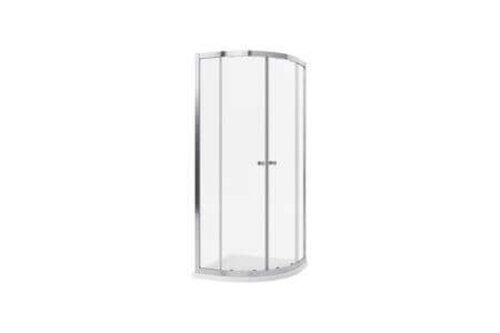
Mira Elevate Quadrant - 900mm x 900mm
Quadrant shower enclosure with 6mm toughened glass and double doors
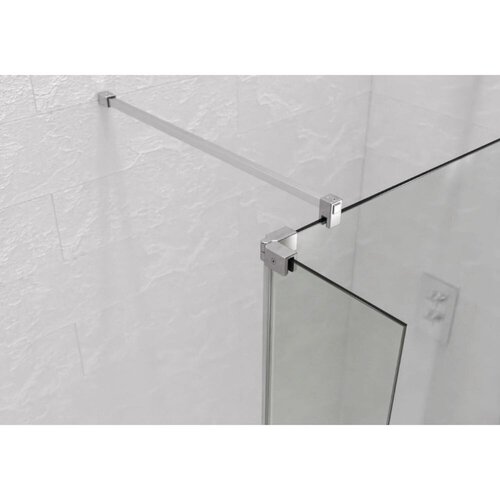
Ultimate 2 Deflector Panel Hinged 8mm LH - 300mm Black
Left-hand black deflector hinge for 8mm glass, 300mm, height 1985mm, retrofittab…
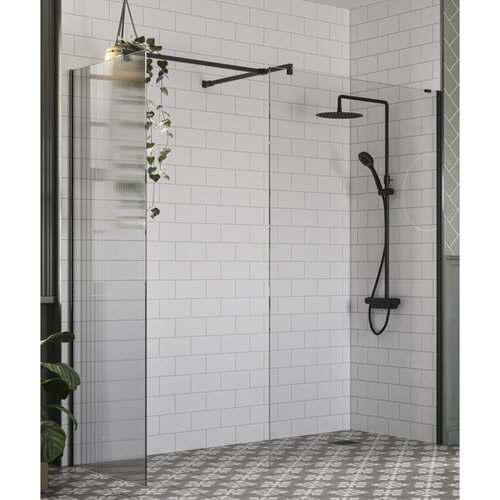
Iflo Mallyan Select Wetroom Panel 8mm - 700mm Black
700mm black 8mm wetroom panel
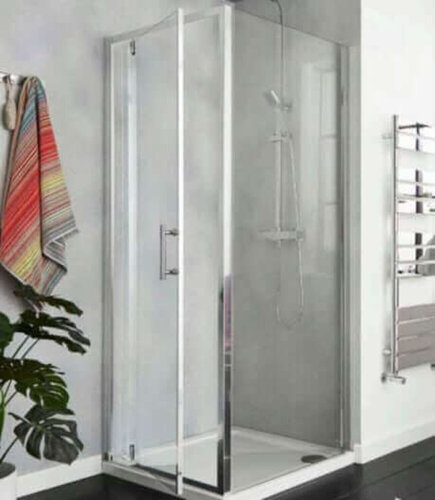
Kartell K-VIT KV6 Enclosures Shower Side Panel - 6mm x 760mm x 1850mm
Contemporary shower side panel, 6mm glass, 760x760x1850mm
Mira Elevate 21814009 Slider Door - 1000mm
1000mm slider shower enclosure, 6mm toughened glass
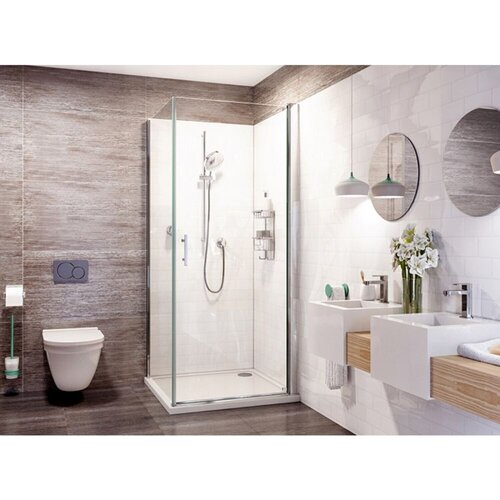
Iflo Linhope Door for Corner - 800mm
800mm frameless corner shower door with low threshold
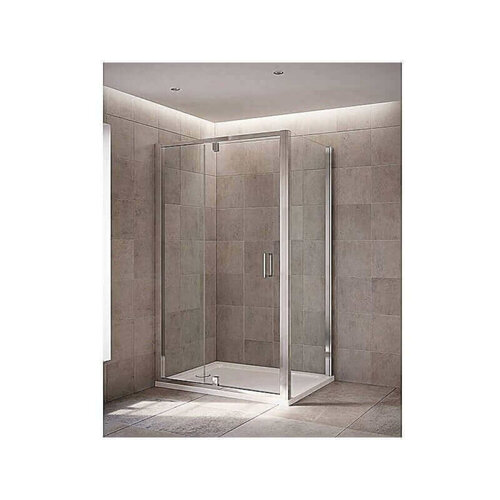
Mira Leap Pivot Door - 1200mm Silver
1200mm frameless pivot door with 6mm safety glass and CleanCoat coating, silver
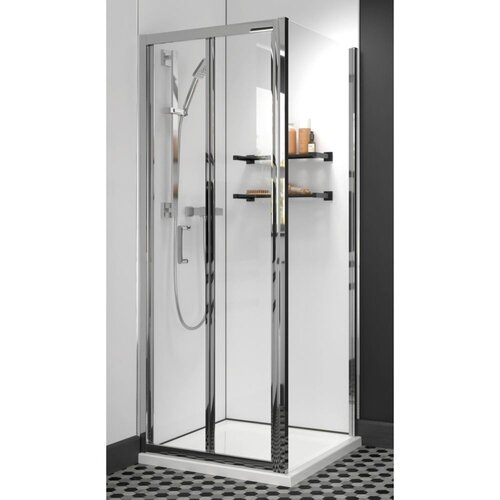
iflo Aira Bifold - 1000mm x 800mm
iflo Aira Bifold shower enclosure, 1000mm x 800mm, watertight seal.
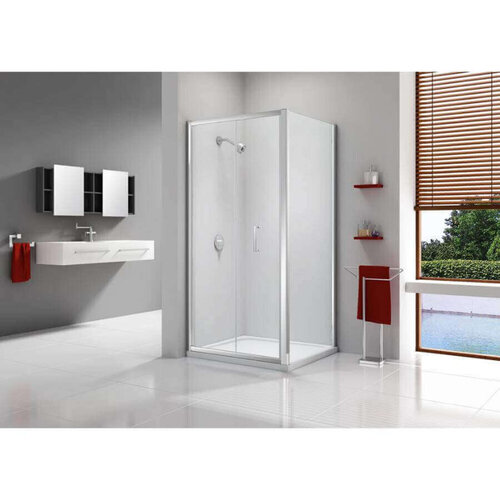
Merlyn Ionic Express Bifold - 800mm Chrome Clear
800mm bifold shower enclosure with clear glass and chrome frame
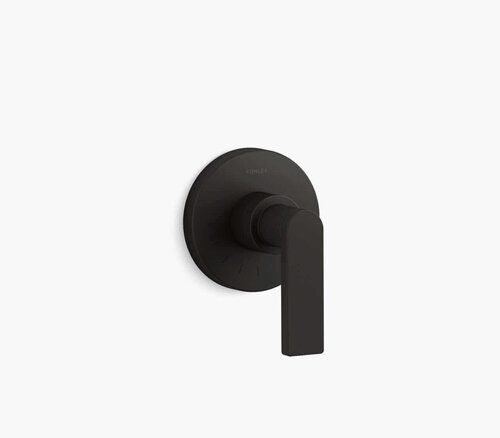
Mira Elevate Pivot Door - 800mm
800 millimetre pivot shower enclosure with 6 mm toughened glass and magnetic sea…
For the Trade
You’re usually choosing shower enclosures on three things: the footprint you’ve got, how the door needs to work, and how much water control the job needs. A sliding set suits tighter rooms because it doesn’t steal clearance. A pivot or hinged option gives you a cleaner opening where space isn’t the issue. A walk-in style comes in when access matters more than keeping everything boxed in. Get the opening arrangement right first. The wrong choice causes call-backs. After that, the glass is the easier part.
Types of Shower Enclosures
If you need bathing and showering in one footprint, a shower enclosure is usually the first call. A separate bath and enclosure only works when the room gives you the space.
A quadrant shower enclosure, a corner set or a walk in shower enclosure all solve the same job, but each suits a different layout and opening line. Shower enclosure doors matter just as much. The wrong door can eat usable space or clash with the room.
In compact rooms, shower baths often get the nod where there isn’t enough room for both a separate enclosure and a standard bath. For the wider Showering range, this is where you narrow the format before you worry about the glass.
Selection Factors for Shower Enclosures
First check the footprint and the opening you’ve actually got. Then decide how much access matters against how much glass and hardware you want to carry.
A sliding shower enclosure usually gets the nod where clearance is tight. A pivot or hinged set is easier to work with if you’ve got the swing space.
A frameless shower enclosure suits a cleaner spec, but it asks for more care on alignment and finish. For awkward corners, a quadrant shower enclosure or offset quadrant shower enclosure keeps the footprint sensible without forcing the tray size.
If the controls are going elsewhere, the enclosure choice often sits alongside a Digital Shower or Digital Showers spec rather than changing the glass itself.
Finish the Room
Once the enclosure’s fixed, the next call is usually the tray, waste, wall lining and any screen or panel detail that finishes the wet area properly. Jobs go wrong when a neat frame meets the wrong finish, or when the waste choice is left too late.
A frameless or low-iron spec needs cleaner wall prep and tighter finishing. A more enclosed setup is the better call when you need to contain splash and keep the rest of the room simpler. If the room’s being tightened up, shower enclosures with matching panels and a sensible storage layout usually save you a second visit.
Related searches
Local availability for Shower Enclosures



