Laminate Flooring
Laminate flooring usually comes down to three things: the look you need, how much wear it’s going to take, and whether you want a click system that goes down quickly. Wood effect laminate flooring is the common pick for most refurb work. Water resistant laminate flooring makes more sense where spills are part of the day. Thinner boards can keep costs down, but you give up a bit of feel underfoot and some forgiveness on less-than-perfect subfloors.
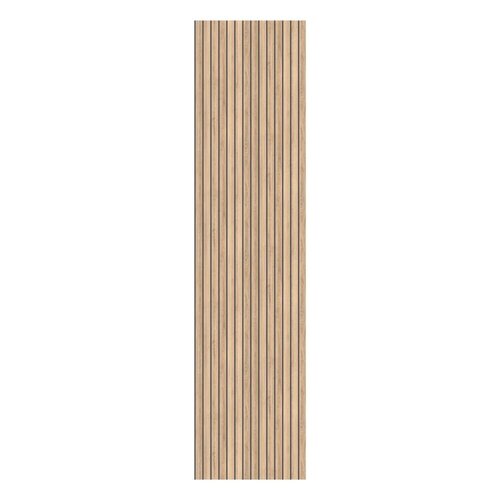
Naturepanel Hydrolock Bleached Cuneo Oak - 2400mm x 598mm x 11mm
Hydrolock tongue & groove slat panel in bleached Cuneo Oak, 2400 x 598 x 11mm
For the Trade
Start with the room use and the finish you’re trying to land, then narrow the board spec from there. Laminate flooring gets picked when you want a hard-wearing surface that goes down quickly and keeps the job moving, but cheaper boards usually show their limits sooner on busy sites or in rental work. If the area is prone to spills, water resistant laminate flooring is worth the extra spend. For a straightforward dry room, standard laminate floor is usually the more economical call. A wood effect laminate flooring finish still does most of the work for you. Grey laminate flooring tends to suit jobs where the rest of the scheme is already busy.
Laminate Flooring Options Compared
When you’re narrowing down laminate flooring, the first split is usually between plain laminate floor boards for general work, wood effect laminate flooring when you need it to read like timber, and water resistant laminate flooring where spills or heavier cleaning are more of a concern.
Oak effect and grey finishes are mostly a spec call. Oak keeps a more traditional look. Grey gives a cleaner, more modern finish.
The trade-off is simple. The more you chase a specific look or added resistance, the more you usually pay. Match the board to the room rather than overbuying. If you want the full parent range, start from Flooring.
Choosing Materials and Size
What usually decides it is the wear you expect, the finish the client wants, and how much handling grief you can tolerate. Wood effect laminate flooring gives you the timber look without the same care level as real wood, but you still need to think about board thickness and how forgiving it’ll be on a less-than-perfect subfloor.
Water resistant laminate flooring is the one you reach for where spills are part of the job. It can cost more, so it doesn’t always stack up in a dry room. If you’re comparing it with Carpet Tiles or Carpet Grippers, you’re already in a different spec altogether. Laminate suits the harder-wearing, cleaner finish.
Completing the Setup
Once the laminate flooring is chosen, the next call is usually how you finish the edges and the joins. That’s where skirting board, scotia and thresholds come in.
Skirting gives the cleanest wall line if you’re changing the trim anyway. Scotia is the quicker fix when the existing skirting stays.
Thresholds matter where the floor changes at a doorway. That’s where most call-backs start if the break isn’t handled properly. If the job needs a different finish in another area, flooring vinyl or carpet tiles may be the next buy rather than forcing one surface through the whole scheme.
Related searches
Local availability for Laminate Flooring




