Workbenches & Sawhorses
If you’re choosing workbenches, start with where it’ll be used and how much moving around it needs. A folding workbench or portable workbench suits jobs where you’re loading in and out. Go heavier when you want less flex and a steadier face for repeated clamping. Sawhorse setups are the lighter option when you just need support for cutting or assembly. You give up the fixed working height and storage you get from a proper bench. Most call-backs come from a bench that’s too light for the work, not one that’s over-specced.
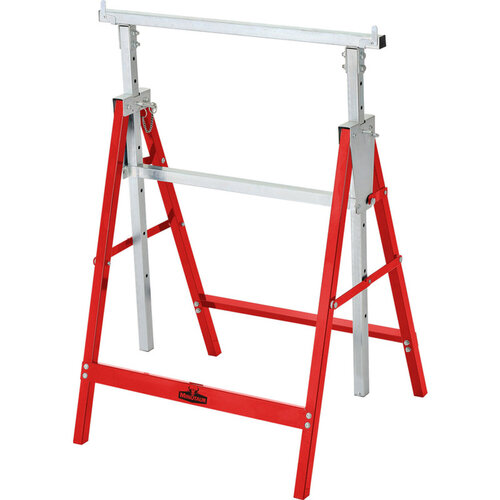
Minotaur Builders Trestle
Red builders trestle, adjustable 800-1300mm, max load 250kg.
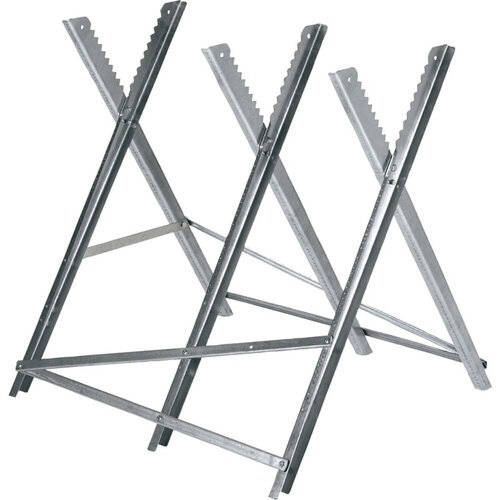
Einhell Log Saw Horse - 80cm Length
Steel log saw horse, 800 millimetres length, adjustable height, holds logs up to…
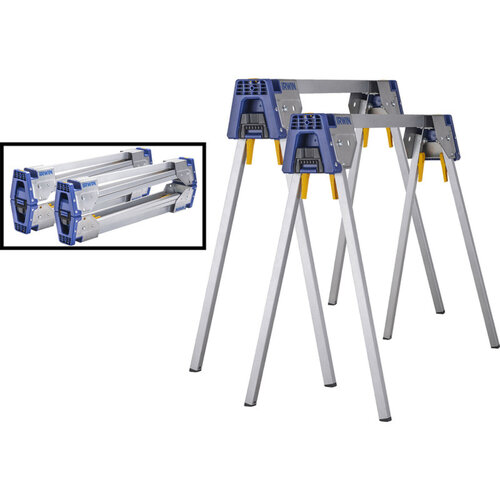
Irwin Trade Saw Horse - 1 Pair
All-metal sawhorse pair with 816kg load capacity and 2x4 grooves
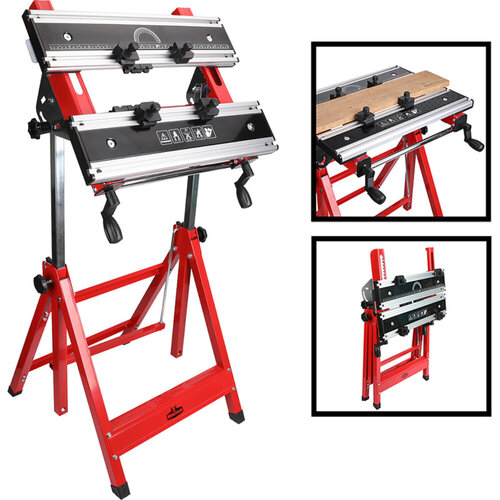
Minotaur Professional Workbench
Foldable professional workbench with 100 kg load capacity and adjustable height.
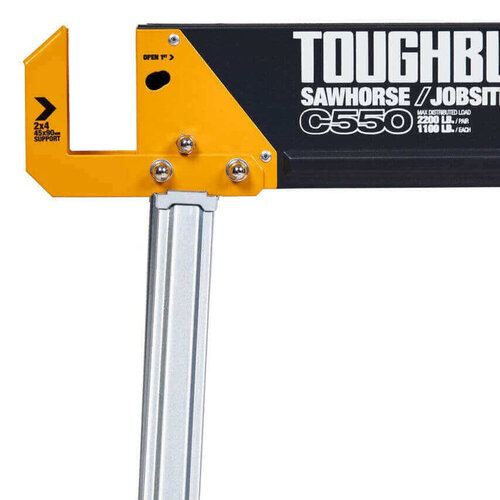
Toughbuilt Sawhorse C550 - Twin Pack
Twin pack Toughbuilt C550 steel sawhorse, 1100 lb capacity each, jobsite table c…
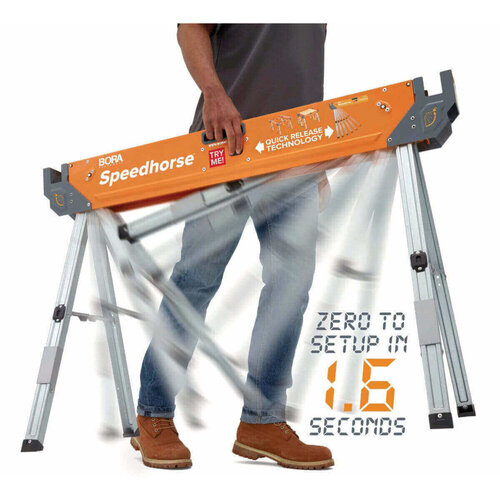
Bora Portamate Speedhorse Steel Sawhorse - 1500 lb capacity
Steel sawhorse with 1500 lb capacity, quick-deploy legs
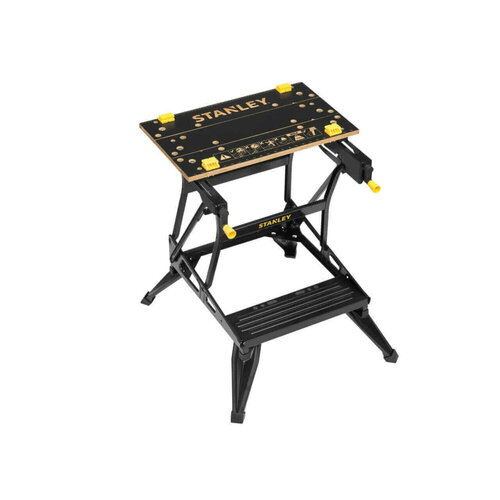
2-in-1 Workbench & Vice
2-in-1 workbench and vice for versatile clamping
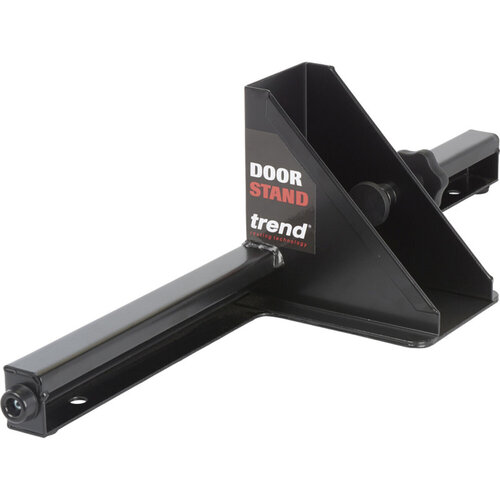
Trend Door Holder Stand - Trend Door Stand - Secures Doors Vertically Or Horizon…
Holds doors up to 2040x926mm, 58kg; secures vertically or horizontally for routi…
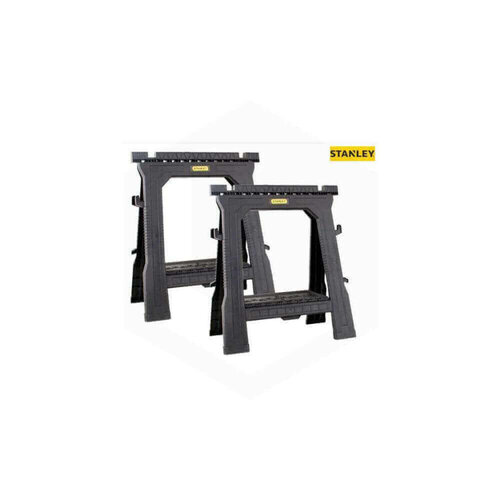
Stanley Heavy Duty Folding Saw Horse - Twin Pack
Heavy duty folding sawhorse twin pack from Stanley
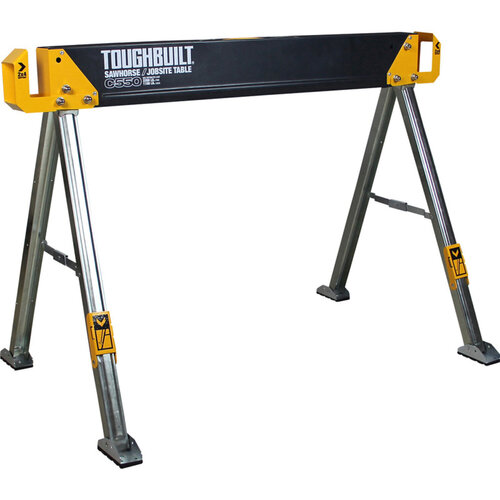
Toughbuilt Saw Horse - C550
Steel saw horse model C550 from Toughbuilt
For the Trade
Start with the space you’ve actually got and how the job will be used. That usually matters more than the finish or the extras. Tight access and regular moving around point you toward a portable workbench or folding workbench. A fixed bench suits a set-up that stays put and takes more abuse. If you need clamping or repeated assembly work, a workbench with vice earns its keep, but it adds weight and bulk. Sawhorses are the lighter, quicker option when you just need support rather than a full bench. The ones that wobble are the ones that get left behind.
Types of Workbenches & Sawhorses
A plain workbench suits general assembly. You get a clear top without extra bulk.
Choose a workbench with vice when you need repeat clamping and want to keep separate kit out of the way.
A workbench with storage keeps tools with the station, which helps on busy benches. The trade-off is less open access underneath.
A portable workbench works better when you need to move between jobs. You usually give up some mass and stability.
If you’re comparing against the wider Hand Tools range, that is the split that matters most - fixed setup or something you can shift and pack away.
Selection Factors for Workbenches & Sawhorses
If the job stays in one place, go for a workbench with a heavier frame and a proper top. It stays put when you’re planing, assembling, or putting it under load.
If you’re loading in and out, a folding workbench or portable workbench saves space in the van. You give up some rigidity, and that’s where wobble usually starts.
A workbench with vice suits repeat clamping. For sheet support or temporary staging, a sawhorse setup is the lighter call.
For timber-heavy jobs, Woodworking Tools is the next stop. If you’re into demolition or stripping out, Bolsters & Wrecking Bars sits alongside it.
Finish the Room
Once you’ve picked the bench, the next call is what the rest of the setup needs to do. On a busy job, that usually means storage for the kit that keeps disappearing, a screen or panel where you need to keep dust and overspray off other trades, and a finish that can take a knock when it gets dragged across concrete.
A workbench with storage makes sense when you’re leaving tools at the station. A plain trestle or sawhorse setup is the lighter answer when you only need support and want it out of the way afterwards. The usual mistake is buying the bench first, then finding the surrounding kit doesn’t suit how the job actually runs.
Related searches
Local availability for Workbenches & Sawhorses








